Blog

Uncategorized

Sales Pitch for the New Book…

I’ve been thinking about a few ways to pitch the new book. Here’s a couple I’m working on, shoot me an email and let me know which one you think works the best.

The Sales Pitch

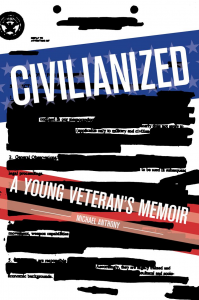
In this dark humored War Memoir, Iraq veteran Michael Anthony discusses his return home from war and how he turned to the Pick-Up Artist Community to help defeat his PTSD.

dark humored military memoir“An intense memoir.” -Kirkus

“I wont soon forget this book.” -Mary Roach

“A must read.” -Colby Buzzell

The Sales Pitch

If you’re interesting in a book about an Iraq veteran who tries to cure his PTSD by becoming a PUA then pick up a copy of my newest book: Civilianized: A Young Veteran’s Memoir. Available at your local bookseller and all your online book retailers.

I don’t know though, it’s hard pitching a book and trying to capture it. Even the above doesn’t do it justice. In reality, it’s just a good book that any veteran who’s ever struggled will understand, relate to, and get something out of. And/or if you have a significant other or friend who’s a veteran who’s struggled with things, it’s a book that will help you understand things a little better. I guess that’s what I’m trying to say, but more elegantly though, you know?

Uncategorized

Civilianized: Book Endorsements

dark humored military memoirHere are a few of the endorsements that Civilianized has received so far:

Praise

“Civilianized has the introspection of a literary memoir and the narrative momentum of a novel.”
–Booklist


“[T]his at-times darkly comic memoir serves as an important reminder of the human cost of America’s involvement in overseas conflicts. . . An intense memoir.”
–Kirkus Reviews


“Michael Anthony writes with emotional clarity, dark wit, and unpremeditated honestly. But what stayed with me most, I think, were the quiet punches to the gut: That to kill oneself, one must not only feel like dying, but also like killing, and the feelings could not be farther apart. That what messed with him the most was not the brutality of his foes but the moral bankruptcy of certain commanders. That it is not so much the intensity of combat that derails a soldier but the flatness of its absence. I won’t soon forget this book.”
–Mary Roach,

Author of Grunt: The Curious Science of Humans at War and Stiff: The Curious Lives of Human Cadavers


“Michael Anthony’s Civilianized howls with hard-earned wisdom. An unflinching story of homecoming and the after-war, Anthony has been to the brink and back. He writes with both soul and candor, and for that, contemporary war literature is in his debt.”
–Matt Gallagher,

Author of Youngblood and Kaboom: Embracing the Suck in a Savage Little War


“Anthony navigates the dark side of a veteran’s homecoming with honestly, skill, and even a touch of humor. Prepare to be disturbed and entertained in equal measure.”
–Brian Castner,

Author of The Long Walk and All the Ways We Kill and Die


“In this tender memoir Civilianized, returning Iraq war veteran Michael Anthony hurls us into the raw, moral betrayals of war and the awful moral dislocation of coming home. At times hilarious, at other times harrowingly sad, Anthony’s memoir screams out at us to pay attention to the needs of our veterans.”
–Nancy Sherman,

Author of Afterwar: Healing the Moral Wounds of our Soldiers and Untold War: Inside the Hearts, Minds, and Souls of our Soldiers


“Important and essential, CIVILIANIZED is an unflinching look at the dark hell of reintegration. Michael Anthony’s personal story provides us with a deeper understanding of the war that many of us post 9/11 veterans face alone when returning home. A must read.”
–Colby Buzzell,

Author of My War: Killing Time in Iraq and Thank You for Being Expendable


Uncategorized

NEW BOOK!!!

dark humored military memoirHey Everyone! I wanted to let you know that my new book is officially for sale and available for Pre-Order.
The title is: Civilianized: A Young Veteran’s Memoir. It’s a story about my homecoming from Iraq and some of the struggles I faced (though it’s a bit darker, and funnier than it might sound/seem). Here’s the text from the jacket:

“After twelve months of military service in Iraq, Michael Anthony stepped off a plane, seemingly happy to be home–or at least back on US soil. He was twenty-one years old, a bit of a nerd, and carrying a pack of cigarettes that he thought would be his last. Two weeks later, Michael was stoned on Vicodin, drinking way too much, and picking a fight with a very large Hell’s Angel. At his wit’s end, he came to an agreement with himself: If things didn’t improve in three months, he was going to kill himself. Civilianized is a memoir chronicling Michael’s search for meaning in a suddenly destabilized world.”

Pick up a copy today!


Uncategorized

Why U.S. Veterans Are Returning From The Wars And Flocking To The Pick Up Artist Community

The term Pick Up Artist or PUA community may sound ordinary and uninteresting to many people; thus, you may wonder why U.S. war veterans are flocking to these groups or sites. What makes this group different from others, and what does it have to offer for U.S. veterans in particular?

What is the PUA community?

The Pick Up Artist community is a seduction society that was established by men, whose main objective was to learn how to successfully seduce or attract women, and create sexual encounters or relationships with them.

Why would veterans returning from war go to the PUA Community?

As expected, soldiers who have been deployed to war zones may spend some eight to 18 months in the field. This separation from their normal day-to-day routine in a peaceful home and community has surely affected their ability to relate with others, especially with the opposite sex. Therefore, the major reason why U.S. veterans go to PUA communities is to be aided in their emotional and psychological expression.

Coping with relationship with their spouses. Lack of physical, emotional, and social communication with their wives or partners could make these former soldiers feel inadequate. They need coaching as to how to win their partners back. The PUA community’s role is to teach them the techniques to be in control of their emotions and restore their self-confidence in relating to their spouses or sexual partners.

Search for sexual relief and lasting relationships. A number of those men who go to war are in their late teens or have just finished high school and may not have experienced a serious relationship with women prior to their deployment. Like the married guys, they also lack the self-confidence to attract or start a relationship with women. Some may even have no knowledge in relating with the opposite sex at all. Going to the PUA community can boost their male prowess and teach them how to make the first move and win girls.

Be in touch with reality and be back to some kind of “normal” status. A community that shares and understands their struggles and needs will surely benefit war veterans. Once they know that they are not alone, they begin to learn to trust again and let go of inhibitions that were developed during their overseas assignment.

What are the techniques taught by the PUA community?

The techniques that Pick Up Artists suggest are based on psychologically proven steps in winning the opposite sex, namely: attraction; comfort and trust; and seduction and sex.

  • Building attraction. Men are mentored as to how to appear and behave appealingly, to be sure of themselves, to start interesting conversations, and other related tips.
  • Increasing comfort and trust. The next step is to establish rapport. Making the other person feel comfortable in your presence would eventually lead them to trust you. This way, one can have successive encounters that may lead to a more intimate relationship.
  • Improving seduction and sex techniques and strategies. The veterans are taught or reminded about tips for successful sexual encounters, such as: how to be a good kisser; how to use touch effectively; how to motivate each other for sex; as well as topics for conversation and other related matters.

Conclusion

 Reports show that the PUA communities have been met with opposition by feminists because they are reputed to be misogynists. Men are conditioned to believe that women are more challenged when they are treated or spoken to negatively, and that women are willing to be manipulated by men at a certain stimulus. However negative PUAs may be considered, they have filled a gap in the veterans’ lives that no other community can provide or has provided so far.

It is the concept of a community wherein they are understood and can freely express their inadequacy, learn from the PUA’s and from their peers, realize that they can be successful in seduction and sex, and to some extent, be brought back to reality and normal life with some help from pick up artists, that makes this group effective and attractive to many U.S. veterans.

P.S.

Now, having said that, there are definitely a lot of weirdo’s in the PUA “scene,” and if a veteran gets in with the wrong crowd, things can definitely head down a dark and narrow path. Message me if you’re interested in some of the organizations that I would and would not recommend!

The Sales Pitch

In this dark humored War Memoir, Iraq veteran Michael Anthony discusses his return home from war and how he turned to the Pick-Up Artist Community to help defeat his PTSD.

dark humored military memoir“An intense memoir.” -Kirkus

“I wont soon forget this book.” -Mary Roach

“A must read.” -Colby Buzzell

Uncategorized

How to Use Military Strategy for Book Promotion…

Having a sustainable career as a writer is challenging. You cannot be a successful author if you don’t have any readers. There are many ways to reach your audience even without a publicist and this can only happen by implementing a good strategy.

Did you know that you can also use the art of warfare in business situations like book promotion? The goal of military strategy is to win over the opponent and conquer territory. Similarly, your goal is to gain a share in the market amidst all the competition.

These are the four basic marketing military strategies:

Defensive – This strategy is important for the current market leader by addressing how it will continuously satisfy consumers and prevent them from going over other competitors.

Offensive – Strategies used by challengers to shake the market leader’s hold.

Flanking – Methods that focus on entering a territory that hasn’t been touched by the market leader. For example, offering alternative products and services or catering only to a specific group within the market.

Guerilla – The primary objective of this strategy is to create a buzz by challenging the status quo. This mainly involves unconventional marketing schemes to catch people’s attention and get them talking.

What strategy suits you? Here’s a simple guide:

Identify your market – What kind of book will you be publishing? Is it fiction or non-fiction? What genre are you writing? Who are your intended readers? By answering these questions, you can pinpoint your market and address their demand.

Know your position in that market – After targeting a market, study the key players who have found relative success in it. These are the publishers or authors whom you are competing with. Read and study their material and find out why they have so much following. Most probably, there are already leaders and challengers within that market. Know your strengths and weaknesses against them.

Choose what you will offer Why should consumers choose you over other authors? Do your materials offer the same experience but sold at cheaper prices? Are your narratives totally distinct from other published books? Is the message that you’re bringing relevant to your target audience? Basically, there should be something about your book that will convince people to buy it.

Set specific success indicators – How many sales are you targeting? Are positive reviews enough to make you say that your book is successful? Does your book need to be a bestseller? Having measurable goals is a good motivation and helps you identify what you need to improve on.

If you’re thinking of self-publishing a book, the guerilla strategy may come in handy. In this military strategy, creativity will be your biggest capital.

There are three main objectives when using the guerilla strategy. Below are some tips on how to achieve each one of them.

To establish the brand by word-of-mouth and cause a stir in the market

Early on, find potential readers by talking about your plans for writing a book. These could be resource persons, fellow writers, friends and family.

Build strong connections with your potential readers. While writing your book, you will come across people who are interested on how it pans out. Keep them in the loop of your progress and build up their anticipation.

Be active in social media. Institute your presence by writing blogs, being active in web forums and posting contents that are relevant to your writing process.

Allow your manuscript to be reviewed by peers or in a workshop. It will give you an idea on how the book will be received. People who have also read it in advance may like it so much that they will begin talking about it.

To exceed consumer expectations, preserve patronage and make a good name

Be the best person to promote your book. Some creative people are afraid to be labelled as sell-outs, but pitching for what you believe people should read is not necessarily degrading.

Make a website for your book. It should have the effect of keeping people excited about your work. The contents could be excerpts, blogs, reviews and promotional videos.

Give incentives to people who promote your book like freebies, discounts and added benefits. If you’re publishing an eBook, you can also allow people to read the first few chapters for free.

To remain in contact with the market and maintain relevance

Keep a strong presence in the literary scene by not just focusing on writing books. You can also produce other works like essays, reviews, articles and short stories. These could be interim outputs while working on another book.

Post videos online telling your readers how you developed your book, the backstory behind the characters, or what you’re planning to do next. Keep them on their toes for more.

Go to writers’ workshops and conferences and improve your craft.

Relate to your readers. Read their comments and suggestions. Reply to some of their messages. Make them feel that their ideas are important to you.

Thinking outside the box is not just useful in writing, but also in marketing. It’s important to capitalize on your strengths to promote your book successfully.

The Sales Pitch

Here’s my newest book in which I’ve used these techniques to help promote. It’s a memoir about my return home from Iraq.

dark humored military memoir“An intense memoir.” -Kirkus

“I wont soon forget this book.” -Mary Roach

“A must read.” -Colby Buzzell

Quote, Uncategorized

Thought For the Day – Chuck Palahniuk (PTSD and scars)

This quote summarizes any veteran with PTSD. It’s easier to remember your friend who died in a mortar attack–the smell of their blood, the feeling of them in your arms, their look on their faces, the sound of their dying breaths–than it is for a person to remember their high school sweetheart, or a good time camping with friends.

This is one of the reasons I think veterans suffer from PTSD. Because it’s easier to remember the bad. There are no scars for  happiness, but there are scars from mortar attacks and firefights–physically and mentally.

Standard, Uncategorized

Veteran’s Day: Are you the type of person that’s worth dying for?

Here’s the thing about Veteran’s Day … and what has me so bitter today…

There’s an implicit agreement between veterans and civilians: As Veterans our job is to fight and die for our country and countrymen; as civilians, your job to make sure that our country is worth fighting and dying for. And honestly, as of late, when I read the news and listen to the stories that are going on, I begin to feel as though you civilians aren’t holding up your end of the deal.

And now, here we are on Veteran’s Day…

Veteran’s day is a day to thank veteran’s for their sacrifices—both current, and veterans throughout the ages. It’s a day to thank those brave men and women who were willing to fight and die for the sake of their country, and their countrymen. From those first Americans fighting to free us from British oppression, to freeing the slaves, to liberating the concentration camp, to modern day soldiers…

But here’s the thing, this veteran’s day (and for the rest of this year, really) instead of wasting our time and money buying “Support our Troops,” bumper stickers, and shaking hands with veterans, or Facebooking a message to a friend-of-a-friend who served overseas; instead, I have a different idea…

Instead of thanking a soldier for being willing to fight and die on our behalf; instead of taking a moment of silence for all those who have given their life in the line of duty; how about we take that same amount of time  and instead focus on being the type of people, and the type of country, that’s actually worth dying for.

Those brave men and women who sign that dotted line are the bravest, and toughest, that our country has to offer—this means that, as always, it’s the toughest who protect the weakest. And that’s fine, we all have our parts to play, not everyone’s made to be a solider and a warrior.

But we need to keep in mind that when those men and women go overseas to fight and die, they’re doing it for US! And those who’ve never fought need to stop and ask themselves, “Am I worth it?” “Am I worth dying for?” And is our “Country worth dying for?” And if the answer is “No.” Then it’s up to us to walk down to that recruiting station and sign ourselves up, or it’s up to else to make sure our country is the type of place that’s still worth dying for. Because I’ll tell you, I’m tired of seeing that my brothers in arms are fighting for people who care more about the Kardashians than the battle of Kandahar, people who care more about the latest iPhone than the struggles that veterans faces after the war, people who’ve sent our economy into a recession, people who’ve shut the government down, and people who refuse to step up and actually make a different.

I don’t think it’s been done deliberately, but I do believe that you guys need to be reminded about the deal: we’ve held up our end, now it’s time for you guys to step up and hold up yours.

ptsd, Self Improvement / Healthy Living, Uncategorized

Alternative Therapies for Veterans with PTSD

There are more than fifty thousand veterans in the United States today. A significant portion of which have experienced, in one way or another, a sort of unforgettable and traumatic event during their tour of duty. When these incidents create frequent and negative emotional personal responses, coupled with physical injury and other physical or psychological illnesses, a person is most likely experiencing Post-Traumatic Stress Disorder or PTSD.

Post-Traumatic Stress Disorder can occur to anyone who has experienced a life-threatening event like military combat, terrorist attacks, child abuse, serious automobile accidents, sexual assault, rape, hurricanes, earthquakes, or kidnapping. In veterans, PTSD usually stems from events during combat or military duty. Symptoms of PTSD may surface right away while there are cases where symptoms only manifest after years.

Symptoms of PTSD in Veterans

Once soldiers and military personnel have retired or ended their service tours and they try to live a normal civilian life, PTSD symptoms can surface. Why this occurs is not known. But the symptoms and its emergence may vary depending on how the trauma’s impact to the veteran, how much control the veteran felt for the event, how close he/she was to the event and to the persons affected.

PTSD is usually diagnosed when the symptoms last for more than four weeks and the symptoms have remarkably affected the veteran’s life and work.

The four types of PTSD symptoms are: 1) Re-experiencing the event, 2) Avoiding memory triggers, 3) Hyper-arousal, and 4) Feeling guilt and numb.

How Is PTSD Treated?

The primary mode of treatment for PTSD is a combination of medications and counseling. The latter can be any form of any of the following evidence-based psychotherapies: Cognitive Behavioral Therapy (CBT), Cognitive Processing Therapy (CPT), Prolonged Exposure (PE) therapy, and Eye Movement Desensitization and Reprocessing (EMDR). These techniques are even endorsed by the United States Department of Defense and Department of Veterans Affairs.

The first line of pharmacologic treatment of post-traumatic stress disorder typically involves the use of Selective Serotonin Reuptake Inhibitors or SSRIs like Sertraline (Zoloft), Fluoxetine (Prozac) and Paroxetine (Paxil). The neurotransmitter serotonin is essential in how our body’s moods are regulated. SSRIs functions in a way that serotonins cannot be absorbed by our brain cells and therefore manages the anxiety and negative moods experienced by patients with PTSD. Current scientific evidence base strongly support these drugs. However, there can be exceptions for their prescription if the patient is experiencing other conditions like bipolar disorder.

In some cases, veterans seek other forms of treatment in conjunction to their current treatment regimens. Psychiatrists also recommend veterans to participate in complementary and alternative forms of treatment for PTSD.

Alternative Therapies for PTSD

Acupuncture

Acupuncture involves the insertion of very thin needles into the skin layers of meridian points in the body. This process aims to restore balance and energy flow, giving the person a profound sense of calm. Veterans with PTSD who seek this form of treatment often report a decrease in nightmares and when it is coupled with psychotherapy, the results can be remarkable. In Oriental medicine, acupuncture is also used to treat other bodily illnesses, anxiety and stress disorders. Most Veterans Affairs offices in the country offer it as one the different alternative therapies available for veterans.

You can check this link if your local Veterans Affairs office has a resident acupuncturist in their roster: http://www2.va.gov/directory/guide/ptsd_flsh.asp

Biofeedback

Biofeedback is a form of a physiological control technique. With the use of an electronic instrument attached to the patient, the patient can alter his/her reactions when the instrument indicates abnormal internal responses. In veterans with PTSD, biofeedback can be applied to control symptoms like sudden anger, being jittery, or having flashbacks.

Relaxation Techniques

Hyperarousal is the state of always being jittery and excessively vigilant for signs of danger. This is a common symptom among veterans with PTSD and can lead to sleeping disorders, panic attacks, and anger issues. When veterans’ exhibit these symptoms are observed, therapists often teach and recommend doing relaxation techniques.

A simple relaxation exercise can involve alternate clenching one’s right fist, releasing it, and doing the same step with his/her left fist. Progressive muscle relaxation can be done in as little as five to ten minutes or whenever patients feel like they are feeling particularly jumpy.

Yoga

Veterans with PTSD often exhibit issues with their body’s fight-or-flight reactions, often making them feel stressed out. By doing yoga, their bodies are retrained to adapt to these traumatic memories by facing them down and incorporating deep breathing techniques and calming posture instead of the usual flighty reactions. Several studies done by the United States Department of Defense also supports the long-held belief that yoga helps improve the health conditions of PTSD-diagnosed veterans.

Most yoga classes can be done in a group setting or you can ask for a one on one session with an instructor. As little as two months of weekly classes can do wonders for your body and state of mind.

Equine Therapy

A recent alternative form of therapy for veterans with PTSD is the use of horses. Veterans undergoing equine therapy are made to care for a horse. Horses are animals that, when taught and trained properly, are receptive to social cues.

A horse’s ability to bond to a human trainer and sense their moods is helpful when dealing with anyone with PTSD. Veterans in equine therapy are found to have decreased stress levels. They are also found to be more compliant with this alternative form of treatment perhaps because horse-riding can be an enjoyable sport.

Equine therapy is also offered in about 30 Veteran Affairs centers in the country.

PTSD Coach App

Another alternative form of PTSD treatment for veterans is the PTSD Coach. This is a smartphone app that veterans can download for free. The app allows veterans to be aware of the onset PTSD symptoms, gives steps to cope with stress and provides links to PTSD help lines.

Integrating technology in this alternative treatment method is a step carving out a safe and nonjudgmental place for veterans who are experiencing PTSD symptoms but are too afraid or confused to seek help.

Mindfulness and Meditation

The practice of mindfulness is useful to veterans with PTSD since this allows them to focus on the now and learn to deal with situations that affect them in the present moment. PTSD patients are often plagued with flashbacks of traumatic events that can be crippling to them. Mindfulness is a tool against these experiences.

Mindfulness-based treatment plans are offered in PTSD clinics and Veterans Affairs centers all over the country. These therapy sessions include group or one-on-one sharing sessions, stretching and meditation exercises.

Massage Therapy

The use of touch and physical manipulation as a form of alternative treatment has been common in many cultures all over the world. This therapy centers on the belief that health is restored by the manual manipulation of bones, muscles and tissues. For veterans with PTSD, this form of treatment can be beneficial since it allows the patients to relax and loosen their minds.

Massage therapy can be used in conjunction with other conventional forms of treating PTSD. Other forms of massage therapy like Rolfing and chiropractice. It should be noted that these treatment modalities should not be used with patients with a history of physical abuse or those with heightened senses.

Family Therapy

Family therapy can often be done in conjunction with any form cognitive behavioral therapy that a person with PTSD commits to. Counseling in this form allows the patient and his/her family to communicate with each other and learn more about how PTSD is treated. The burden of treatment for PTSD should not only fall towards the person experiencing it, but it should also be shared with you and your family for it to be successfully treated.

The important part about family therapy is to improve a family’s relationship dynamics.

Energy Therapy

Energy therapy is a relatively newer form of complementary and alternative therapy for PTSD. One of the most prominent forms of energy therapy is called Emotional Freedom Technique or EFT.

This treatment option is a variation of acupuncture since the patient touches the acupuncture points or energy meridians in one’s body to stimulate them. Energy therapy can be learned through a practiced instructor and, later on, the patient can perform the techniques himself.

Image Rehearsal Therapy

Image rehearsal therapy is used for managing nightmares in patients with PTSD. It is a form of guided imagery where patients are taught to picture a series of scenes or a picture from their traumatic experiences and use this to cope with it over a period of time. When veterans are taught to consciously picture these images in their minds, their nightly terrors will not be as disturbing in effect.

There are other forms of alternative therapies used by different cultures in the world. The ones enumerated here are those most effective for PTSD. If you wish to explore them, you can visit www.holisticonline.com

Implications

At this time, there is insufficient proof of the effectiveness of complementary and alternative therapies for treating Post-Traumatic Stress Disorder in veterans. However, initial findings of alternative therapies are encouraging. Therefore, they are best used in addition to conventional treatments for PTSD patients or as a stepping stone for patients who decline to get medical treatment for PTSD.

Where to Get Help

Talking to a therapist is not easy nor is taking medications whose side effects you cannot be sure of. But if you are experiencing any of PTSD symptoms, it’s no good keeping your feelings repressing them either. There are a lot of options for now out there. You can seek for help online, just visit www.ptsd.va.gov/public/where-to-get-help.asp

Civilianized: A Young Veteran’s Memoir

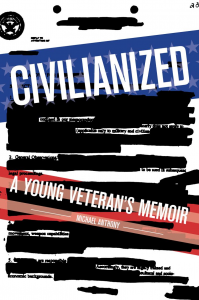
In this dark humored War Memoir, Iraq veteran Michael Anthony discusses his return from war and how he defeated his PTSD. Civilianized is a must read for any veteran, or anyone who knows a veteran, who has returned from war and suffered through Post-Traumatic Stress Disorder (PTSD).
dark humored military memoir“An intense memoir.” -Kirkus

“I wont soon forget this book.” -Mary Roach

“A must read.” -Colby Buzzell

“[S]mart and mordantly funny.” –Milwaukee Journal Sentinel

“Anthony delivers a dose of reality that can awaken the mind…” Bookreporter

Order your copy of Civilianized: A Young Veteran’s Memoir .