Best Of, Blogishness, Blogishness

Bullying Experiment

bully free zone

Iraq War veteran Michael Anthony talks about battling bullies. Make sure to watch the bully experiment video at the end.

Several years back, I was going for a walk around my neighborhood—one of my usual weekly routines—and as I turned a corner on one particular day, I saw a man and woman struggling in front of me. I wasn’t sure what was going on between them until I saw the man pull back and punch the woman. I immediately ran over as she fell to the ground. They were still yelling as she fell. She was his wife, and apparently he had hit her before.

“Yeah call the police. I’ll Kick your ass.”

I jumped between the two of them, pushed the guy back with my body and covered up the woman. The guy backed off as I helped her to her feet. He began yelling at me: “What are you some tough guy? Yeah help her up pussy. I’ll kick your ass.”

He yelled in the background as I looked over and asked if she was alright. I then took out my phone and called the police (the process is actually a lot longer than you’d think).

He kept yelling, “Yeah. Call the police. I’ll kick your ass…”

He got in my face, “I’m talking to you, tough guy.”

I looked him up and down as he stood there. He wasn’t that big of a guy, maybe 5’11, 175lbs. Not huge, but nothing to scoff at. I’m not that big of a guy myself either. I stand just under 5’10 and fluctuate between 155-165lbs. But one thing that you can’t tell from looking at me is that I’m a war veteran and I’m trained in MMA. There was no doubt in my mind that I could drop this guy. But instead, I ignored him as I talked to the police and kept standing between him and the woman.

“I’ve trained for years–in the army and in gyms–for such a moment…”

He kept yelling, walking in circles around the two of us. I stayed on with the police and simultaneously tried to make small talk with the woman (once I actually got someone on the phone they got a trooper there within a few minutes). The police came, took over the situation, and then told me I could leave. So I did. I left.

But here’s the thing. I’m fairly certain that I did what was right. Once I was there, I knew that the guy no longer posed a threat to the woman, and I didn’t see him as a threat to me, so instead of fighting him I called the police. I talked to the woman and protected her. But still… when I think about the incident I regret not knocking the guy’s lights out. I mean, how often does a man get a chance to beat up a wife beater? I’d trained for years–in the army and in gyms–for such a moment, and I’d been in fights before, so I wasn’t scared. But I didn’t do it. I don’t know why. It may not be a popular sentiment, maybe I’m compensating for something, but I honestly regret not punching him.

Anyways… this video made me think about it. Check it out and let me know: What would you do?

Photo: Eddie~S/Flickr


Politics / News, Politics / News

Judge to Vet: Your Service In Iraq Makes You a Threat To Society…

ptsd1

How war led to a ten year prison sentence for Andrew Chambers.

People often talk of the daydreams that soldiers have while at war. The dreams of returning home to their wife and kids, reunions with brothers and sisters, a beer at the bar with old friends. But few talk about the dreams of going to war. In 2003 I joined the United States Army—after we were already engaged in two wars. Everyone in basic training knew we’d be going to war. We weren’t draftees, we were volunteers. We had volunteered to fight, to kill, and to die. We daydreamed about leaving that wife, kids, and job behind, going off to war. We daydreamed about spending time with our new friends. Writing those emotional letters home. Killing the enemy. Saving our friends. Fighting for something worthwhile. Being something more than we were back home.

“Find a veteran and listen to his story … a lot of us just need someone to talk to.”

The problem is, that like most parts of life, things never happen as we expect or hope. War happens, people die, things are seen, and then we begin having daydreams of coming home. But home isn’t what we expected either.

For Andrew “Sarge” Chambers, his journey back home ended with a ten year prison sentence for attempted man-slaughter; and it led a judge to declare, “Your service in Iraq makes you a threat to society.”

What follows is Andrew’s powerful story of coming home and how the dream of war led to the nightmare of reality.

“Find a veteran and listen to his story … a lot of us just need someone to talk to.”

In our new War & Veterans section here at GMP we’ll be doing just that. Giving a place where veterans, and family-members of veterans, can simply talk and share their stories.

About Andrew: Andrew “Sarge” Chambers proudly hails from Pickerington, Ohio. He served in the U.S. Army and has maintained the habit he acquired there of cursing just a bit too much. Throughout his service, Sarge was also able to maintain and hone his sense of honor and kindness, but the experience did slightly alter his sense of humor. While categorically not a morning person, when he is able to finally pry his eyes open, he always thinks to himself that he would rather be fishing. Most of his days are filled with coaching softball, Garth Brooks songs and thoughts of the family he hopes to be able to start soon. He is taking the stage to tell his story, parts of which can be seen in the documentary Operation Resurrection: The Warrior Returns. After TEDxMarionCorrectional he will work on his next unique thing.

–photo: Truthout.Org/flickr

Best Of, Politics / News, Politics / News, Self Improvement / Healthy Living, Self Improvement / Healthy Living

Soldiers and PTSD, Part 1: Going Vegan

Nad-e-Ali, Helmand

“Blood, blood, blood, makes the green grass grow,” was the mantra we used throughout basic training. Our young boots hitting the pavement, grass, and dirt, each heel giving the cue to yell the cadence “blood,” then again, “blood.”

This wasn’t done to turn us into blood-thirsty sadomasochists (as some would have you believe). It was done to prepare us for the realities of what we were facing. We were a platoon of soldiers, recruits, who had joined the military in 2004. Our country was in the midst of two wars, and we were being prepared to fight, to die, and to take lives. For the soldiers who came before us the question was always, “If we’ll go to war,” but for us, the question was no longer “If,” but “when.” We were being prepared to live, to fight, to kill, and to die for our country. There’s no other way to put it:

“Blood, blood, blood, makes the green grass grow.”

“There is no reverse basic training to teach us how to come home.”

The problem, though, facing the modern military isn’t with training us to become soldiers and to kill, the problem is with training us to come home. In basic training, a Drill Sergeant’s only job is to turn his soldiers into “Lean, Mean, Fighting-Machines.” And that’s what he does. He’s good at it. It’s why the United States has the most powerful military in the history of the world. But once soldiers fight. Kill. Come close to death.

Then come home. And that’s when the problems begin.

What war and the military does is light a fire in the belly of all who serve. A fire of intensity, for life, for passion, to be part of something greater than themselves. Coming home extinguishes our fire…but embers still burn, and there lies the trouble. In my own unit, since coming home, dozens have gone through drug, alcohol and PTSD clinics, dozens more have gone through divorces, and we’ve lost three to suicide. There is no reverse basic training to teach us how to come home, how to go back to the way we were, how to look at and deal with what we’ve seen and experienced. There’s no way to snuff out the final embers. The only option is to light the fire back up and channel it. It’s why service platoons and charities of veterans giving back to their community have become so popular. Because soldiers come home and they’re depressed, they’re anxious, and for a lot of them, the only thing that helps is giving back to their community. We’ve given until it hurts, and the only answer is to give back some more. It’s the irony of war.

For one soldier, Specialist Timothy Scott, his idea of giving back was to become a vegan (someone who doesn’t eat meat, eggs, dairy, or wear leather products, etc.). SPC Scott—a square-jawed, Flaming-Lips listening, southern boy, who’s an Iraq war veteran and former infantry soldier—was nice enough to sit down for an interview.

What inspired you to become a vegan and how did it relate to your service in Iraq?

“I got into it initially just as a diet. Like, I was having problems after I got back, stressed out, fighting with my girlfriend all the time, and just all kinds of shit was going on. It got pretty bad one night and I knew I needed to do something so I Googled some stuff on anxiety, and stuff about soldiers coming home. I don’t know how it happened, but I knew I needed to do something drastic. I somehow got onto a site about veganism and after a few hours reading things I don’t even know why, it didn’t seem like me, but I decided to give it a try. And I got my girlfriend to agree to do it with me.”

Yeah that’s definitely a drastic jump for someone to make. Did veganism help with anything? How?

“Yeah, it was weird once I got into it. I read the book China Study, and watched some YouTube videos like Earthlings, and, I don’t know, at first it was like this big distraction…”

What do you mean by distraction?

“I dove right into it and it just gave me something to focus on. I wasn’t yelling at my girlfriend anymore — I was suddenly yelling at my TV or the book I was reading. At first I was still… angry and stressed out and anxious, but it was like it just transferred from my girlfriend and family to the meat and farming industry. I guess it wasn’t much better, but it was a start. But that’s the thing. Before, what was stressing me out was reading about the wars in the paper—or the lack of reading about them—and then talking to people back home, and I don’t know…everything was just stressing me out, people’s attitudes just pissed me off. After I got into veganism though I just stopped focusing on the wars and how shitty I thought everyone was. I just focused all my rage on the farming and meat industry. It was like they were the ones who started the wars and who were poisoning us.”

So you were a vegan, and were angry and pissed off, that sounds about right. Then what happened?

“Then, I don’t know, I went to some meetings that I found on Meetups.com, and my girlfriend and I just joined this community. And I saw that people were pissed off and angry about issues but not like me, and then I don’t know. I didn’t notice anything really actually “Happen,” but my girlfriend and I started to become closer again, cooking food together, and bitching about how there’s nothing to buy at the store (but in a more fun light-hearted way) and we started to go to vegan dinners with people from the group…and…I still talked to all my friends but…it was like I was part of a new community. We ate together, talked about the same things, and the wars were still going on and people were still doing dumb shit, but I just stopped thinking about it so much. I feel guilty even saying it, that I stopped thinking about the wars and what was going on, but I needed to. I needed some space, something else to think of. Veganism offered that. Part of me feels like it could have been anything and it just happened to be veganism. But I’m glad it was. I feel healthier now, happier, and I can think about the wars and the military again, but more objectively now that I’ve had some space.”

What about veganism is it that you think helped you deal with your PTSD?

“I mean, it’s just like I said. It gave me something different to focus on. It could have been anything, but that night when I was on the computer it was just veganism that I started reading about. That’s the one thing I’d recommend to other vets. I’m not saying just to become a vegan—do your own research—and I know you’ll feel guilty for not constantly thinking about the wars and your friends, but just give yourself a break. Find something that can take your focus away because space from my thoughts was what I needed so I started thinking about something else. What a person focuses on grows…so just change what you focus on.”

The interview with SPC Scott went on a little bit longer, but the above questions and answers are the gist of the overall tone. And Scott seems to mirror what many self-help “guru’s” will often tell you, “what you focus on grows,” and it’s not to say that veganism is “The Answer,” or even that there is an answer, but what it seems SPC Scott wanted to share was that veganism gave him somewhere different to place his focus. And even though he was still angry and pissed-off, at first, what he did was break his patterns. His mind started to go someplace besides back to the war and all that had happened. Veganism helped change the way he looked at things, the world, his family, his friends, and his experiences.

About this Interview Series: We’ll explore stories from several different veterans—and family members of veterans—and what it is that they’ve done in their lives that has made a drastic impact in helping with their PTSD. Stay tuned for more articles and personal stories/transformations. Mine will be next up in the Series.

***

Full-disclosure: I’m a vegan, too, but for other reasons than Scott.

–Photo: Defence Images/Flickr

Best Of, Self Improvement / Healthy Living, Self Improvement / Healthy Living

New Writer for Good Men Project

Good-Men-

Hey guys!  I’ve been hired as the new editor for the War & Veterans section of the Good Men Project.

I’ll be running some good articles there (and a few oldies from here as well, seeing if they can get another life) but I’ll be looking for anyone who wants to add some submissions!

Don’t worry, though, I’ll still be blogging here.  Writing, MFA school, veganism, military, PTSD.  Including, how I cured my hypothyroidism, naturally.

If you want to submit shoot me an email at: WarandVeteransGMP@Gmail.com


Self Improvement / Healthy Living, Uncategorized

Vegan Diet for Rheumatoid Arthritis

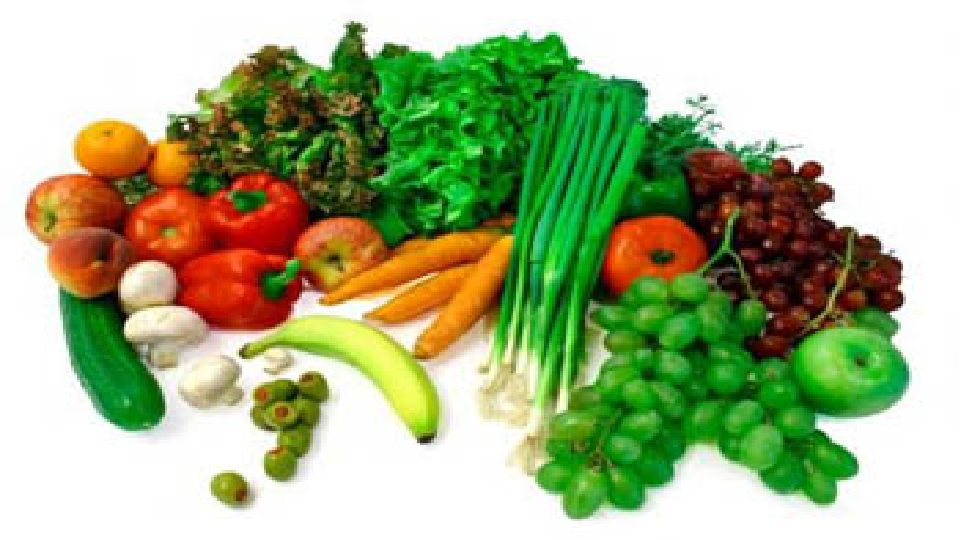
UntitledThe immune system attacks healthy tissue when an autoimmune disorder is present. Pain, swelling and stiffness result from the assault on the lining of the joints that occurs when Rheumatoid arthritis (RA) is present. A link between RA and diet has not been established clearly and there are not official guidelines for it but there is an indication that eating a diet without animal products can make the symptoms less severe, especially when there are sensitivities to specific foods. A vegan diet might aid you to have a longer healthier life.

 Rheumatoid Arthritis Symptoms and Antibodies

 The body will produce antibodies when you eat something that it sees as a danger in order to fight the attack. The inflammation causing pain from RA results from the processes that are triggered. Certain foods, particularly those of an animal origin cause antibodies to be produced in those with Rheumatoid arthritis.

 Vegan Diets Benefits

 Unlike a vegetarian diet which removes only meat from the diet, the vegan diet removes all animal products and is thought to prevent strokes and heart attacks in those suffering from Rheumatoid arthritis.

 The center of vegan meals is rice, millet, corn, sunflower seeds, and vegetables. The main source of calcium is sesame milk and the vegan diet is made up of ten percent protein, thirty percent fat and sixty percent carbohydrates.

 Those that continually follow a vegan diet manage to lower levels of LDL cholesterol faster than those that do not follow a vegan diet. There are also lower levels of C-reactive proteins in the blood. The C-reactive protein indicates that inflammation is present in the body. Vegans lose more weight and have a lower body mass index on average than those who do not follow a vegan diet.

 Things to Remember with a Vegan Diet

 There are some things to keep in mind when you consider changing to a vegan lifestyle. There can be deficiencies in the nutrients such as calcium and vitamin B12 unless you follow a careful plan for menus. You should consult a professional before you make serious changes to your diet. Four food groups should be emphasized with a vegan diet:

 Legumes

  • Fruits
  • Vegetables
  • Grains

 It is also recommended that you take a multivitamin daily. It is easier to transition to a vegan lifestyle to help deal with your RA when you do it a little bit at a time. There are some foods that you can add little by little to your diet and obtain key nutrients:

 Broccoli, collard greens, soy products, fortified juices and kale all give you calcium.

  • Pinto beans, soy products, spinach and chickpeas provide iron.
  • Corn, soy products and legumes provide protein.
  • Fortified soymilk and breakfast cereals can provide you with vitamin B12.

 When it comes to Rheumatoid Arthritis symptoms, eating a vegan diet can go a long way to reducing the pain associated with inflammation by reducing the response of the immune system to things that it mistakenly considers to be harmful.

Tammy Mahan has worked in the healthcare field for over 20 years. She enjoys sharing her knowledge with Healthline.com


Blogishness, Self Improvement / Healthy Living, Self Improvement / Healthy Living

Hypothyroidism: A Search For the Cure: An Update

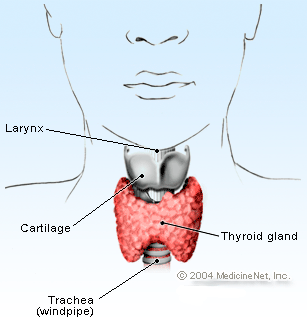
thyroid_glandIf you read my recent post (Hypothyroidism a search for the cure) you’ll know that I was recently diagnosed with Hypothyroidism—for the second time.  I was diagnosed several years earlier and after changing my diet I was cured of hypothyroidism, but I’ve since stopped doing the things which had cured me the first time, and I’ve been diagnosed, again.  I’m committed to healing myself the natural way, again, and to help others with their search for a cure, I wanted to document it here (also, remember, I’m not a doctor, this is just my experience and thoughts, etc.).

As an update, here’s what I’m doing to help me along in my search for a cure:

I’ve stopped eating broccoli, green peppers, and celery–unless they’re cooked.

I’ve stopped eating peanuts.

I’ve begun eating a spoonful of extra virgin coconut oil every day. 

I make sure to workout three times a week–at the very least going for a forty-five minute walk.

I’ve committed to reducing stress in my life and just completed a month long meditation weekly meditation class.

I’ve also had an hour long meeting with Dr. Mark Mincolla .   Dr. Mincolla is all about natural healing and had cured his own hypothyroidism.  We had a nice meeting and he did this thing where he puts tubes up to my throat and then tried to push my arm down while holding the tube there.  It’s suppose to show what foods weaken my system and which don’t.  On his recommendation I should no longer eat wheat, any type of nuts, or potatoes (along with all the foods mentioned above–and he liked the idea of a spoonful of coconut oil every day).  I’m not sure I buy into what he says, just because it seemed so odd, but he was recommended by a friend I respect, so I figured I’d give it a try.

As of today I feel as though I have no symptoms of hypothyroidism but I’ll be tested again in January and that will be the real “official,” test. 


Blogishness, Self Improvement / Healthy Living

Can Omega 3’s Help With PTSD and Depression? Yes, According to…

A friend shared with me some articles about the research that the military’s doing regarding Omega 3’s and how low levels are linked to suicide and depression.

Article 1) Click here.

Article 2) Click here.

I can’t comment too much about the articles since I’ve only recently read them, but I do know that a healthy diet is a great defense when dealing with PTSD, Anxiety, TBI and depression.  Here’s what my friend added in: “(Apparently the depression link was strong enough to prompt them making the recommendation for all DoD personnel-they had done some sort of study of suicide victims in the military and found extremely low levels of the omega 3 chemicals across the board, so that prompted the study the second article talks about).”


Michael Anthony is an Iraq War Veteran and is the Author of: Mass Casualties: A Young Medic’s True Story of Death, Destruction, and Dishonor in Iraq.

Best Of, Self Improvement / Healthy Living, Self Improvement / Healthy Living

Hypothyroidism – An Experiment for the Cure

Recently, I was diagnosed with Hypothyroidism (underactive thyroid).  This is the second time in my life that I’ve been diagnosed with hypothyroidism.  The first time was back in 2005 when I was nineteen.

Here’s the story:

I was nineteen years old and my doctor at the VA diagnosed me with hypothyroidism.  I was prescribed Levothyroxine NA (Synthroid) 0.025 mg tablets.  After taking the pills for a few weeks I started to get really moody.  I stopped hanging out with friends and got a case of ‘the blues’.   (Now, granted, this could be correlated to a typical case of nineteen year old teen-age angst.)  But eventually, I decided that I wanted to stop taking the pills.

I consulted Dr. Google and I read that several people were claiming that Organic Virgin Coconut Oil was good for hypothyroidism.  After several weeks/months, I stopped taking my Synthroid and started taking a tablespoon of coconut oil every day and began taking my daily multi-vitamin and omega 3 pills.  Several months later, when I had my blood tested again, I no longer had hypothyroidism.  I was last tested in 2011 and I still had normal thyroid levels.  I haven’t been to the doctor since then, but I went this past Tuesday, and I was once again diagnosed with hypothyroidism.   (For these last few years I haven’t been taking my daily tablespoon of coconut oil and I’ve lapsed on my omegas and multi-vitamins.)

thyroid_gland

My doctor has again prescribed me Levothyroxine NA (Synthroid) 0.023 mg tablets.  I’ve decided, though, that since I’ve already beaten hypothyroidism once the natural way that I’m going to try again (and this time keep up with my regimen).

I’ve been researching diets all across the web, talking to people, and looking at all the possible options.  My next lab tests are in three months so I told my doctor that in three months if my thyroid function isn’t better naturally than I’ll take the medication.

I will detail my findings here.

I’m not trying to sell you a book or some magic formula (as I’ve seen on other sites across the web) I’m trying to beat this for myself and I’m hoping that I’ll be successful and that I’ll be able to pass on the success to others.

I’ve already beat it once.  Here’s hoping that I can again.  And you can too!

Symptoms:

Thinning hair (but I am getting a little older)

Tiredness (but I am in grad school full time, working, and the wife is pregnant)

Weight gain (pretty consistent 155 lbs (occasionally fluctuates a few pounds though))

Memory (possible memory problems but I’ve never had a great memory)

Iraq War VeteranMichael Anthony is an Iraq War Veteran and is the Author of: Mass Casualties: A Young Medic’s True Story of Death, Destruction, and Dishonor in Iraq.