Blackout Poetry, Writing

Can Computers Write Poetry? And Is Computer Programming Poetry?

I was recently watching this Ted Talk about this computer program that could write poetry.

In the video, this computer programmer, Oscar Schwartz, programmed a computer to write poetry! (He also used other algorithms created by other people to obtain more samples of computer-generated poems.)

[pullquote]With a dictionary database, a decent relational algorithm, and a simple spinner, a computer can create poems. However, the question remains—will a computer-generated poem have meaning or creativity in it?[/pullquote]After the computer wrote a few poems, Schwartz showed a few people the poems and asked them what they thought of them (without telling them that the poems were written by a computer). The people he showed the poems to loved them! This made me think of a study that was done where several “wine connoisseurs,” were given cheap wine (but in an expensive bottle! all the “wine connoisseurs” praised the cheap wine, and several even preferred it over the real expensive wine. It would’ve been great if Schwartz had actually submitted the poems to magazines across the country—maybe even given the computer a pseudonym!

Anyway, in the video, Schwartz shows the audience several poems and asks them to guess which poem was written by a human.

The whole purpose of the experiment, and talk, seemed to be more about the artificial intelligence (AI) side of things—and whether or not computers could actually express themselves through poetry. What do you think? Can they?

Yes, I do believe computers can create poetry. The only issue here is how great computer-generated poems will be. Will the poems be meaningful? Will they sound like they were created by humans?

As fascinating as Schwartz’s talk was, I did have a little problem with the presentation. You see, in the video, it was easy to fool the audience. With how poems are structured, the layman cannot fathom which one is written by a person, and which one isn’t. Poems are often cryptic and can be ten layers deep. It is common that too much application of creativity and wordplay in the poem can make it even incomprehensible to us regular folks—IE: those of us without MFA’s in poetry.

Most people are only familiar with kindergarten and elementary poems. After all, they were taught in schools and are much more memorable. Unlike poems written by poets, popular or not, children’s poems are much easier to understand. They follow a basic pattern, and convey their meanings directly.

For example, children and popular poems often follow a basic structure combined with rhyming ending words.

Roses are red,

Violets are blue,

Sugar is sweet,

And so are you.

Here is an example that was used in the presentation:

Red flags the reason for pretty flags

And ribbons.

Ribbon of flags

And wearing material

Reason for wearing material.

Give pleasure.

Can you give me the regions.

The region and the land.

The regions and wheels.

All wheels are perfect.

Enthusiasm.

That poem was written by Gertrude Stein, a famed American poet and novelist. Truth be told, this poem sounds like gibberish of a drunken Irishman. Unless you try hard to analyze it, you will certainly feel that it does not make sense.

If you compare the two poems, the first one can be easily read and understood. Truth be told, with simple lexical functions written in a computer program, it is easy to create poems like the previous example. Unfortunately, simple word randomizers can easily create gibberish— combinations of words that can easily appear like the latter example.

[pullquote]Poetry is a creation of art, and a computer program that writes poetry is definitely a beautiful creation of art.[/pullquote]With that said, it is easy to fool humans, especially those of us who are not adept with poem readings. Due to that, the tests done in the presentation were not that reliable. To my dismay, I was unsatisfied.

With a dictionary database, a decent relational algorithm, and a simple spinner, a computer can create poems. However, the question remains—will a computer-generated poem have meaning or creativity in it? As a matter of fact, I believe not— not in this lifetime.

However, we can be fooled. After all, poetry is art. And as usual, all works of art are open to multiple interpretations. A computer can generate text that can look like a poem. Once humans interpret it as a poem and we extract a particular meaning out of it, then it will become a real poem. Nevertheless, that poem will be devoid of emotions and insight of a real human being.

Unless humans can develop fully functional artificial intelligence (AIs) that can feel emotions and experience life, these poem-generating programs will be incapable of creating poems like humans do. An AI must be capable of rewriting itself and mutating to a point that it will completely deviate from what was written in its source code.

That program must write itself a poem not because it was programmed to do it, but it must be because it wanted to create one itself. It must be capable of desiring to express its emotions, whether it is digital. But if the program cannot do that, it can only create imitations of poems — a block of text that looks and sounds like a poem, and not a poem written by a human with a soul and emotions.

However, in my opinion, I still do believe that the computer wrote a poem, but I believe the computer’s poem was just part of a much larger poem—the poem/art that the programmer created when he first wrote the computer’s program to write poems. Poetry is a creation of art, and a computer program that writes poetry is definitely a beautiful creation of art.
Uncategorized

New Web Design – And New Hosting

The website has got a totally new design, which I’m sure is obvious to those of you who’ve been here before. It’s a simple, easy design, and I think it came out really nice.

Here’s the deal though: things can happen when switching over to a new web design and new hosting, so if you come across any dead links, or anything out of place, please shoot me an email.

Thanks!

Politics / News, ptsd, Uncategorized

Seeking Help at the VA for PTSD

PTSD Rally

War veterans are the ones who usually develop PTSD. This can occur while they are still working with the military or after. Thankfully, the Department of Veterans Affairs has several programs that can help retired soldiers cope up with PTSD. From diagnosing the common symptoms to intensive treatment, the VA has you covered. Moreover, they also employ numerous mental health professionals who relentlessly research on new and effective ways to help PTSD patients and their families.

In this post, you will learn more about the Department of Veterans Affairs’ PTSD treatment programs and how you can apply for help.

Eligibility for VA PTSD Services

Every war veteran has a chance to be eligible for the VA’s PTSD services. Here are the factors that can affect your eligibility:

  • You managed to perform active military services when you were in the Navy, Air Force, Marines, Coast Guard, or Army.
  • You were discharged by the military under honorable conditions.
  • You are part of the National Guard or Reservist corps and you completed a federal deployment in a combat area.

However, you should also take note of the following:

  • Health care services are also available for veterans who did not serve in combat.
  • You can still use the veteran’s health care services, even on non-medical injuries or health concerns that are connected to military service.
  • The benefits that you get from another health care system are different from the benefits at the Department of Veterans Affairs.
  • The health care facilities at VA hospitals are available for both men and women. 

Available PTSD Treatments

Thanks to the advancements in medicine and technology, veterans suffering from PTSD can choose from a variety of treatments. Below is a list of mental health treatments offered by the VA:

Cognitive Behavioral Therapy (CBT)

This one is a type of counseling method and is considered as one of the most effective methods for treating PTSD. The VA offers two types of therapies under CBT. One is the Cognitive Processing Therapy (CPT) and the other one is Prolonged Exposure treatment.

CPT will teach you effective ways for handling any distressing thoughts that come in your head. Therapists can walk you through your previous experience (in a safe manner) and help you understand the situation better. If you know how the traumatic experience changed your outlook and behavior, it will be easier for you to cope with it.

CPT has four main processes:

  • Diagnose any PTSD symptoms and learn how the therapy can help
  • Gaining more awareness about your inner feelings
  • Cognitive restructuring – the processes of challenging your thoughts and feelings
  • Understanding the sudden changes in your beliefs after facing a traumatic experience

Aside from frequent meetings with a mental health professional, you will also be given practice exercises that will develop your emotional and cognitive well-being, even when you’re outside the therapist’s office.

The second option for the CBT is the Exposure Therapy. As the name implies, this treatment requires the patients to be repeatedly exposed to any feelings or situations that they have been avoiding. This will teach war veterans that not everything that reminds them of a traumatic event should be avoided.

After identifying all of the situations that you commonly avoid, your therapist will require you to confront all of them until your stress levels or fears decrease.

Similar with the CPT, the Exposure Therapy also has four parts:

  • Educating yourself about the symptoms of PTSD and how Exposure Therapy can help you out
  • Training how to breathe. This may sound like a silly task, but it is actually an effective relaxation technique that will help you overcome stress.
  • Facing the normal and safe situations that you commonly avoid. The more you become exposed to these situations, the easier it will be to get over your PTSD.
  • Discussing the traumatic experience and learning how to control your thoughts and feelings.

Exposure Therapy requires around 15 sessions with your therapist and practice assignments that you need to do on your own. As time goes by, you will be able to control your reactions when faced with stressful situations.

Eye Movement Desensitization and Reprocessing (EMDR)

In this type of therapy, you will be required to focus your attention on hand gestures while you are discussing the traumatic events that triggered PTSD symptoms.

When our eyes are following fast movements, it becomes easier for our brains to process traumatic events. If you have other things to focus on while discussing these memories, your behavior will change as time goes by. It will also help that you relax and efficiently handle any emotional distress in the future.

EMDR is composed of four parts:

  • Identifying the traumatic memory or belief that triggered any negative reactions
  • Learning how to desensitize yourself when recalling traumatic memories. In this stage, you will create mental images while performing eye movements that your therapist will teach you
  • Reinforcing positive thoughts
  • Undergoing a body scan. The therapist will focus on tension in your body in order to determine the additional issues that you need to face in the future.

After the EMDR sessions, you will have a more positive outlook when recalling traumatic events in your life. It usually takes around four sessions with a therapist to see the improvements.

PTSD Services offered by the VA

  • Thorough mental health testing
  • Providing medications
  • One-on-one psychotherapy sessions
  • Therapy sessions for the family
  • Conducting of group therapy sessions. The topics covered in these sessions include stress management, searching for combat support, and strengthening relationships with the family. There are also support groups for war veterans with a specific type of trauma.

The treatments offered by the VA are thoroughly researched to make sure that they are effective on war veterans. However, please be reminded that the programs offered may vary per VA hospital. In some cases, the treatments may also need a referral. Your personal physician can guide you in selecting the program that suits you best.

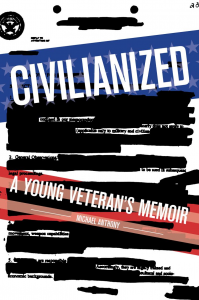
Civilianized: A Young Veteran’s Memoir

In this dark humored War Memoir, Iraq veteran Michael Anthony discusses his return from war and how he defeated his PTSD. Civilianized is a must read for any veteran, or anyone who knows a veteran, who has returned from war and suffered through Post-Traumatic Stress Disorder (PTSD).

dark humored military memoir“An intense memoir.” -Kirkus

“I wont soon forget this book.” -Mary Roach

“A must read.” -Colby Buzzell

“[S]mart and mordantly funny.” –Milwaukee Journal Sentinel

“Anthony delivers a dose of reality that can awaken the mind…” Bookreporter

Order your copy of Civilianized: A Young Veteran’s Memoir .

Picture: Flickr/Army Medicine

Comedy

How can I tell if my joke is original?

Some of you may already know this about me, but for those of who don’t, a while back I gave stand-up-comedy a shot. It was an intense experience! Standing in front of a crowd, with only five minutes to win them over, it was one hell of a ride. In the end though, it turned out that stand-up-comedy wasn’t for me. It was a fun experiment, and I got to make some fun videos and meet some interesting people, but it turned out that I enjoyed writing jokes more than I did performing them.

In the writing of jokes though, there’s something that’s bothered me for years. Sometimes a joke pops into my head. It’s brilliant. It’s genius. The funniest thing I ever came up with. But is it really my joke? Did I come up with it? Or am I just remembering, or paraphrasing, a joke I heard a few weeks ago, or even months ago?

I know I’m not the only one with this problem, but over the year’s whenever I’ve consulted Dr. Google to find out if my joke is original or not, I’ve gotten little help in being able to discover if it is indeed an original joke.

Has anyone else had this problem? Any ideas on ways to figure it out?

Best Of, Politics / News, ptsd, Uncategorized

11 Common PTSD Myths Debunked

female veterans with PTSD

One challenge that victims of PTSD have to face is the judgment of other people due to misinformation. Because of the myths surrounding this medical condition, the relationships of the patient with his or her loved ones are often strained.

The prejudice and maltreatment of PTSD patients have been around ever since human beings started to wage wars against each other. Even though extensive research has already been conducted regarding the psychological effects of war on soldiers, there is still a lot to learn about PTSD. That is the reason why these myths are still proliferating.

So to help you better understand combat-related PTSD, here are several myths that were already debunked a long time ago:

Having PTSD means you are mentally weak

This myth is one of the oldest and most difficult to combat. Having this type of condition is not a sign of mental weakness, or even weakness of character. Aside from the internal strength of an individual, there are a lot of factors that can affect the development of PTSD. Examples of this are the type of trauma, circumstance, duration, and the number of traumatic events that happened throughout a person’s lifetime.

PTSD also occurs when the individual does not have a solid interpersonal support system. Sadly, a lot of war veterans do not get the support that they need because of social stigma and misunderstanding.

Any experience can be a traumatic one

It is true that a lot of events that happen to us can become stressful. However, there are still several criteria that need to be met before calling a certain event as “traumatic.”

The criteria are as follows:

  1. Being exposed to sexual violence or near death events that may lead to serious injuries.
  2. The person must directly or indirectly be involved in the traumatic experience, or he has witnessed it in person.

When you say indirectly exposed, this pertains to hearing and seeing the details of the traumatizing experience. An example of this one is the drone pilots. They may not be in the middle of the warzone, but they are still exposed to the horrors of the battlefield because of the things that they see and hear on the screen. In addition, they also enter and exit the war zone regularly.

A person can easily develop PTSD after being exposed to a traumatic incident

When faced with a traumatic experience, you can expect that you will be mentally, emotionally, and physically stressed. However, it does not mean that you will already develop PTSD immediately. In order to be diagnosed with this condition, the feelings of extreme fatigue, stress, or anxiety should last for more than a month. In addition, people who suffer from PTSD also find it difficult to focus on their work and personal life.

People who suffer from PTSD are automatically crazy and extremely dangerous

Class war movies and sensationalized news reports have taught us that war veterans suffering from PTSD are crazy and should be avoided at all costs. Keep in mind that this stereotype is entirely wrong. This type of condition should never be associated with psychosis and extreme violence. PTSD is mostly about abrupt mood changes and reliving distressing memories. Never use the word crazy when talking about patients suffering from this condition because it damages their reputation and stigmatizes them further.

People with this condition are completely useless in work environments

A lot of soldiers do not want to seek treatment for PTSD because they fear that they will lose their ranks in the military. This is also the same with other workers who have developed the same condition.

Sadly, what people do not know is that they can still keep their regular jobs while getting PTSD treatments at the same time. One should not be too scared when diagnosed with this condition because it is very manageable.

PTSD is easy to get over with as time goes by

Thanks to modern PTSD treatments, it is now easier for war veterans to return to their normal lives. However, this condition does not instantly go away once you take some anti-depressants. Sometimes, conquering PTSD is a life-long journey. While most people learn to cope on their own, a lot of patients still seek professional guidance every once in a while.

War veterans who developed PTSD are not considered as part of the “wounded soldiers”

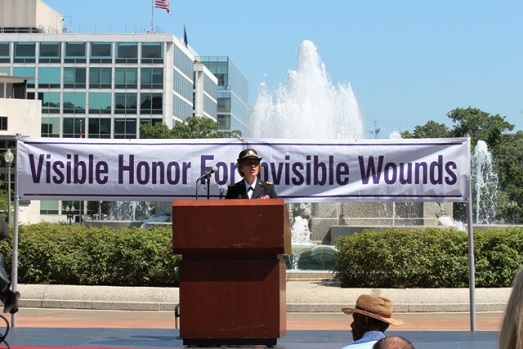
That is because you cannot see any huge scars or other types of physical injuries. However, one should remember that veterans with PTSD have made a lot of sacrifices to protect the country. Psychological injuries are quite the same with the physical ones. Both are collateral war damages that are inevitable.

You cannot do anything for war veterans (or other people) suffering from PTSD

This condition is actually very responsive to treatment. And with the advancement of medical technology, there is currently a multitude of ways to treat PTSD. If your current treatment does not work for you, you can still choose other options like cognitive behavioral therapy or prolonged exposure treatment. Seeking help from a professional is the first step in choosing an option that works best for you.

PTSD only targets a specific age group

Keep in mind that children can also experience PTSD. But as discussed in Chapter 1, their symptoms may vary depending on their age.

You only need one treatment for PTSD

Not necessarily. The type and complexity of the treatment will still depend on the person suffering from this condition. If he is showing severe symptoms, it means that he may have to undergo different types of therapies. Doctors may also ask him to take several antidepressants.

Therapies never work

Therapies are effective at treating patients because it helps them understand what PTSD is all about. It also helps health professionals to assess the patient and develop ways to help them cope with their situation. With methods such as exposure therapy and cognitive behavior therapy, people with PTSD will learn how to face their fears and deal with bad memories in a healthier and safe manner.

Civilianized: A Young Veteran’s Memoir

In this dark humored War Memoir, Iraq veteran Michael Anthony discusses his return from war and how he defeated his PTSD. Civilianized is a must read for any veteran, or anyone who knows a veteran, who has returned from war and suffered through Post-Traumatic Stress Disorder (PTSD).

dark humored military memoir“An intense memoir.” -Kirkus

“I wont soon forget this book.” -Mary Roach

“A must read.” -Colby Buzzell

“[S]mart and mordantly funny.” –Milwaukee Journal Sentinel

“Anthony delivers a dose of reality that can awaken the mind…” Bookreporter

Order your copy of Civilianized: A Young Veteran’s Memoir .

Picture: Flickr/MilitaryHealth

Best Of, Blogishness, ptsd, Uncategorized

What exactly is Post-Traumatic Stress Disorder (PTSD)

Uncle Sam PTSD for Veterans

What is PTSD?

Posttraumatic stress disorder, or more commonly known as PTSD, is a type of debilitating medical condition that usually occurs to individuals who have undergone a very traumatic incident.

A traumatic event is something terrible that you’ve seen, heard, or experienced first-hand. This includes:

  • Exposure to war
  • Terrorist incident
  • Sexual assault
  • Physical abuse
  • Life-threatening accident
  • Natural disasters such as hurricanes or earthquakes.

Most people experience symptoms such as extreme anxiety, difficulties in sleeping, or having nightmares after a traumatic incident. However, not everyone will have PTSD. You can only tell if you have the condition if the common symptoms get worse as time goes by.

How PTSD Develops

Everyone who has experienced a terrifying incident will have the common symptoms of anxiety during the early stages. However, only a handful will experience PTSD as time goes by. There is still no accurate answer as to why only some people develop PTSD in their lifetime.

There are several factors that might increase your chances of having this mental condition:

  • The intensity of the trauma
  • If you, or your loved ones, acquire major injuries after an accident or disaster
  • Your proximity to the event
  • The level of your reaction during the traumatic event
  • Your level of control during the event
  • The type and frequency of the support that you get after experiencing the traumatic event

 Common Symptoms of PTSD

The symptoms of this debilitating mental condition commonly starts after the person experiences any terrifying incident. However, it will take months or years before these symptoms intensify. In addition, they may also disappear and reappear over several years.

Below is a list of the most common symptoms of PTSD. If these symptoms persist for more than a month, or if they are disrupting your work and home life routine, there’s a big chance that you have PTSD.

  1. You keep re-experiencing/reliving the traumatic event

This usually occurs in the form of nightmares or horrifying memories. In some cases, you may also experience flashbacks. These are moments wherein you feel like you are going through the traumatic event again. Compared to a nightmare, flashbacks are usually more vivid.

  1. You veer away from events that remind you of the traumatic experience

As much as possible, you try to avoid any situations (or even other people) that might trigger any bad memories. In addition, you may even attempt to stop thinking about the traumatic event.

  1. Sudden negative changes on feelings and behavior

Because of the disturbing event that happened to you before, you may suddenly find yourself feeling a lot of guilt, fear, and shame. Another common symptom of PTSD is that your enthusiasms for activities that you loved doing in the past suddenly faded.

  1. You feel too jittery

This excessive feeling of alertness is more commonly known as hyper arousal. Even if the environment is guaranteed 100% safe, your body remains tense and alert. In addition, you are always on the lookout for danger. Another symptom of hyper arousal is difficulty in sleeping or concentrating.

Can children also experience PTSD?

Sadly, even the little ones can also have PTSD when faced with horrifying experiences. The symptoms may be similar with the ones mentioned above, but there might still be slight changes depending on their age. Once the kids grow older, they will experience PTSD symptoms that are similar to that of the adults.

These are just some of the common signs that your children are experiencing PTSD:

  1. Kids age 6 years and below tend to feel upset when their parents are not around. They also tend to have some trouble sleeping or going to the comfort room by themselves.
  2. Kids age 7 to 11 relive their traumatic experiences stories and drawings. They also experience nightmares. As they grow up, they tend to become more aggressive. Kids who experience PTSD show disinterest in going to school and even playing with their friends.
  3. Kids age 12 and up experience PTSD symptoms that are similar to adults. This includes withdrawal, substance abuse, running away from home, and anxiety.

Other problems experienced by people with PTSD

It is not just the anxiety attacks, nightmares, and flashbacks that PTSD victims have to endure. Other problems that they might experience include:

  • Extreme feelings of despair and shame
  • Depression
  • Substance abuse and alcoholism
  • Chronic pain
  • Problems with balancing work and home life
  • Problems in maintaining good relationships with people

Usually, these other problems can be fixed when the patient undergoes the standard PTSD treatment because they are somewhat related. Once you master the coping skills from PTSD therapy sessions, it will be easier for you to handle these problems.

Civilianized: A Young Veteran’s Memoir

In this dark humored War Memoir, Iraq veteran Michael Anthony discusses his return from war and how he defeated his PTSD. Civilianized is a must read for any veteran, or anyone who knows a veteran, who has returned from war and suffered through Post-Traumatic Stress Disorder (PTSD).

dark humored military memoir“An intense memoir.” -Kirkus

“I wont soon forget this book.” -Mary Roach

“A must read.” -Colby Buzzell

“[S]mart and mordantly funny.” –Milwaukee Journal Sentinel

“Anthony delivers a dose of reality that can awaken the mind…” Bookreporter

Order your copy of Civilianized: A Young Veteran’s Memoir .

ptsd, Self Improvement / Healthy Living, Uncategorized

Why Does My Military Spouse Have PTSD?

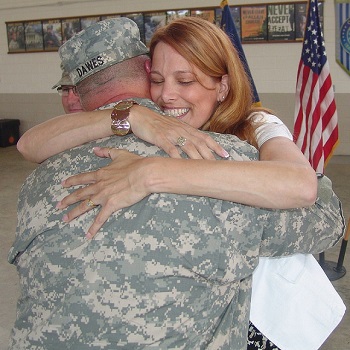
military spouses hugging

Why does my military spouse have PTSD?

Do you have any idea what PTSD is? Let’s paint this kind of picture: A young man is on verge of graduating on high school. He had a good family and decided to serve the country as a military man. Before he entered the military school, he has no prior history of mental health issues or substance abuse. He successfully joined the military and was given the combatant role. He was trained with the only purpose of striking out violence for the benefit of his country. He was repeatedly placed in situations where he strikes out violence and is rewarded intrinsically, extrinsically, and monetarily. The wartime traumatic events exposed him to the stress that leads to the PTSD (Post Traumatic Stress Disorder) development. He then leaves the military service and is anticipated to leave everything behind with a small transitional aid. The post-traumatic disorder makes the life and transition difficult. Drug and alcohol abuse helps ease those kinds of symptoms. He then becomes very dependent on drugs and alcohol decreasing his ability to effectively cope up and increasing his problems. This young man, who happens to be your spouse, is now in a very dangerous place socially, physically, and mentally. His coping skills still consists of substance abuse, violence, and compartmentalizing, which are signs and symptoms of PTSD that can lead to legal and family problems.

According so some researches about post-traumatic stress disorder, it has a high correlation to substance abuse. As a matter of fact, 34.5% of post-traumatic disorder diagnosed men have problems on substance abuse, specifically with drug, and 51.9% post-traumatic disorder diagnosed have substance abuse related with alcohol; figures that qualifies nearly all our returning veterans with post-traumatic disorder perfect for treatment for substance abuse. Other researches showed that 4 out of 5 war veterans that have suffered from post-traumatic disorder have re-occurring disorders of substance abuse.

The fact that there’s such a huge correlation is not really surprising, especially to those patients who completely knows or deals with PTSD patient, but many people still ask why this’s the case. Actually, there are 3 theories that the researchers established with the high correlation between the substance abuse or drug and alcohol addiction and Post-Traumatic Stress Disorder. The research supports the entire theories by differs among the demographic of post-traumatic disorder.

High Risk Theory

This theory on high risk states that the drug and/or alcohol addiction occurs before the disorder’s development. This has the idea that the abuse on substance leads to the activities with high risks and that or some of these events lead to PTSD development. While this may be true to some cases, the military veterans aren’t likely to be taking drugs and/or alcohol during or prior to the traumatic combat events or experiences.

Susceptibility Theory

Another theory is the susceptibility theory which states that there’s something with the drug and/or alcohol abuse that increasing the susceptibility of a person for post-traumatic disorder development following the traumatic experience. While it’s not exactly known what this might be there are available theories for review before doing further research. The substance abuse does alter the normal structures and functioning of systems in the body; these kinds of facts are the grounds for this theory’s foundation.

Shared Vulnerability Theory

This theory states that some of the people may possibly have genetic vulnerability that leads to develop both the substance abuse and PTSD after a traumatic experience. This also states that patients might develop both of the symptoms after the traumatic experience, while some who lacks this susceptibility in genetic might not.

Self-Medication Theory

This states that the people who are suffering from the post-traumatic stress disorder use substances in order to cope up with the symptoms and signs of the disorder. For example, the individuals might use the euphoric drugs in order to deal with their depression, or utilize depressants such as benzodiazepines or alcohol in order to deal with the anxiety. Either of the ways, these individuals use self-medication methods in order to deal with the PTSD distress. This theory is based on the actual conversations of the author to the veterans and the personal experience that this’s case with most of the returning military veterans that suffers both conditions.

Regarding what theory applies to your spouse, there’s a definitely correlation between the post-traumatic disorder and substance abuse; many of these happens especially with our returning military veterans. Often, they find solace by drinking alcohol and using drug in order to cope up with the distress but over time, they will only find that their problems have just increased. These individuals will lead to chemical dependencies which in time will be too hard to control.

PTSD in our military spouses has been shown to display itself through hardship in controlling the irritability, anger, self-medicating with drugs and/or alcohol, and the high risks and reckless behaviors; an old concerning group of problems that are only aggravated by drugs and/or alcohol dependency. Now, cover this with an altered moral state and decreased inhibition that is developed in the mind of all combatant and much more problems develop. This is a kind of individual that is in great need of comprehensive care, yet many still go untreated.

Why are there are too many veterans that suffer from this disorder? Don’t they want to get better? Do they lack enough knowledge in order to understand what’s really going on? Are we, people in the society not effectively doing our part for them? It’s very important for these individuals to seek services though capable medical institutions to handle both their PTSD and substance abuse.

Civilianized: A Young Veteran’s Memoir

In this dark humored War Memoir, Iraq veteran Michael Anthony discusses his return from war and how he defeated his PTSD. Civilianized is a must read for any veteran, or anyone who knows a veteran, who has returned from war and suffered through Post-Traumatic Stress Disorder (PTSD).

dark humored military memoir“An intense memoir.” -Kirkus

“I wont soon forget this book.” -Mary Roach

“A must read.” -Colby Buzzell

“[S]mart and mordantly funny.” –Milwaukee Journal Sentinel

“Anthony delivers a dose of reality that can awaken the mind…” Bookreporter

Order your copy of Civilianized: A Young Veteran’s Memoir .

Photo: Flickr/NCNGPAO

Comedy, ptsd, Uncategorized

How Spouses Can Help Their Veteran with PTSD

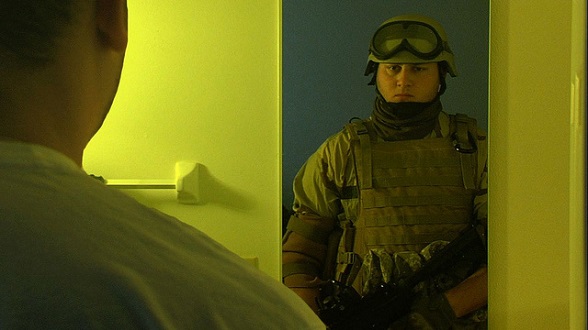
soldier with ptsd looking in the mirror

There are dozens of rumors circulating around veterans that suffer from PTSD but it is commonly known that you will never truly understand their symptoms until you’re living with a sufferer. Helping your spouse who is dealing with PTSD can be one of the most fulfilling things in both of your lives and it can help to strengthen your marital bond more than ever before. Below are some tips that you can use to your advantage to help your veteran deal with this debilitating mental condition until they are able to receive professional help.

How PTSD Affects Relationships

When your veteran comes home, you may notice that they are exhibiting telltale signs of PTSD. These symptoms can be responsible for a variety of issues in your relationship including: loss of trust, loss of closeness, inability to communicate, and issues with problem solving. They will act differently around you and patterns may develop that could harm your entire relationship.

Providing Social Support

Making sure that veterans with PTSD have the social support that they need is essential to make sure that they are able to work through their symptoms of the illness. The more meaningful relationships that they have, the higher their self-esteem will be which will make them more likely to seek professional help. You may also find that your veteran will begin helping others which can help to reduce their personal feelings of failure. Making sure that you’re there for them at the end of every day is also essential for eliminating any stress.

Seeking Professional Help

It is important that you take the necessary steps to make sure that your spouse gets the professional attention that they need. Even if you have begun to see positive signs of their behavior changing, a professional evaluation is invaluable. You should work together to find a professional therapist in your area that specializes with PTSD to help your spouse know that they are in good hands. You may also want to consider finding a therapist that works with couples and families as it is a mental disease that affects everyone around the survivor.

The therapist that you work with may suggest a variety of treatments including:

  • Group Therapy
  • Stress and Anger Management
  • Couples Counseling
  • Family Therapy
  • Assertiveness Training
  • Family Education Classes

Making sure that your family is prepared for the long journey ahead of you and your spouse is essential for ensuring that they can easily assimilate back into civilization.

Civilianized: A Young Veteran’s Memoir

In this dark humored War Memoir, Iraq veteran Michael Anthony discusses his return from war and how he defeated his PTSD. Civilianized is a must read for any veteran, or anyone who knows a veteran, who has returned from war and suffered through Post-Traumatic Stress Disorder (PTSD).

dark humored military memoir“An intense memoir.” -Kirkus

“I wont soon forget this book.” -Mary Roach

“A must read.” -Colby Buzzell

“[S]mart and mordantly funny.” –Milwaukee Journal Sentinel

“Anthony delivers a dose of reality that can awaken the mind…” Bookreporter

Order your copy of Civilianized: A Young Veteran’s Memoir .

Picture: Flickr: Peter Murphy