ptsd, Self Improvement / Healthy Living, Uncategorized

10 Alternative Therapies for Veterans with PTSD

PTSD is a serious condition that affects many of the veterans and soldiers coming back from war zones. Although there may be no physical signs of trauma, the condition manifests itself through mental or psychological symptoms that could negatively affect the quality of life of soldiers and veterans when they finally come home.

PTSD Causes & Symptoms

 Generally speaking, PTSD is experienced by anyone who goes through a trauma, which encompasses anything shocking or scary happening to you. PTSD makes one believe as though their life and the life of others are in danger, even during safe situations. The condition causes intense fear and the feeling of helplessness, which may cause sufferers to react in an extreme way. Veterans make up a large percentage of those who suffer from PTSD although the condition is not exclusive to their class.

Alternative Therapies for PTSD 

 Cognitive Therapy

 Cognitive therapy is a type of talk therapy wherein sufferers are given the chance to talk about their experiences in order to gain better understanding of the trauma and what they’re going through. It focuses on the negative thinking that keeps a person stuck in PTSD with the intent to solve that negative way of looking at things eventually.

 Exposure Therapy

 Exposure therapy is often used together with cognitive therapy. This is a process wherein you’ll be taught how to safely face situations considered to be frightening or dangerous. It involves the use of virtual reality programs that let you enter a situation where trauma took place with the intention of promoting a different set of emotions or results.

EMDR

 EMDR stands for Eye Movement Desentization and Reprocessing. It focuses on eye movements and guiding such movements so that you can reprocess the memories that cause trauma. This is often used together with exposure therapy and cognitive therapy.

Brief Psychodynamic Psychotherapy

 Under this therapy technique, you get to learn how to process and properly deal with any emotional conflicts cased by PTSD. The psychotherapy identifies the factors that trigger symptoms of PTSD and how you can identify and hopefully deal with them before they get worse.

Acupuncture

 Acupuncture can be tricky considering that it involves pushing needles into the body. Once a veteran successfully goes through the procedure however, he’ll find that the process itself is nothing to worry about. Acupuncture stems from traditional Asian culture, which works by targeting specific stress spots in the body and releasing miniscule currents that will help an individual relax.

 Meditation

 It may seem awkward at first to see a veteran doing meditation, but studies show that the technique actually helps a lot in calming PTSD sufferers. The method itself is known for quieting the mind, helping individuals relax, and essentially give them a sense of peace that flourishes from within.

Group Therapy

 Group therapy is also another useful technique used to help veterans with PTSD. As the name suggests, it involves talking to people who are undergoing or have undergone the same process as you. By being in the company of people who understand, those with PTSD can express themselves in the best way possible and essentially swap stories and methods that will lead them to a path of healing.

 Pet Therapy

 Perhaps the best alternative therapy for PTSD-sufferers today is pets or dogs specially trained to meet the needs of veterans. These dogs are specially tuned to detect any tremors or shift in the emotion of their human charges and immediately go to their side to offer comfort. In some instances, the dog may even wake up their charge who t is having a bad dream. So far, this is the most effective and highly rewarding alternative therapy for veterans with PTSD.

Video Games

 A little unorthodox, studies show that video games also work as alternative treatments for PTSD. Specifically, the game Tetris is being used by doctors to study and gain results as to the positive effects of video games in hindering the symptoms of PTSD. Studies show that there’s an incredibly 70% decrease in the symptoms as the game stops the involuntary flashbacks those with PTSD have.

Family Therapy

 Family therapy works much like cognitive therapy, but it requires the involvement of every person in a family. This is important since the bursts of anger and other behavioral issues a person may have during PTSD can affect everyone in the family; hence, the therapy makes it possible for the veteran to express himself and at the same time, teach every family member to understand the situation of their loved one. More importantly, family therapy teaches them on the proper way to react, ensuring that the path to recovery becomes faster and easier.

Of course, those are just few of the alternative therapies currently used by veterans suffering from PTSD. Medications are also recommended by doctors although they are often mixed with alternative therapies to increase the chances of recovery. If you or a loved one is suffering from PTSD, do not miss any of the alternative therapies mentioned above.

Civilianized: A Young Veteran’s Memoir

In this dark humored War Memoir, Iraq veteran Michael Anthony discusses his return from war and how he defeated his PTSD. Civilianized is a must read for any veteran, or anyone who knows a veteran, who has returned from war and suffered through Post-Traumatic Stress Disorder (PTSD).
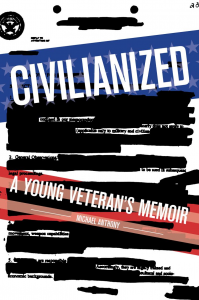
dark humored military memoir“An intense memoir.” -Kirkus

“I wont soon forget this book.” -Mary Roach

“A must read.” -Colby Buzzell

“[S]mart and mordantly funny.” –Milwaukee Journal Sentinel

“Anthony delivers a dose of reality that can awaken the mind…” Bookreporter

Order your copy of Civilianized: A Young Veteran’s Memoir .
Blogishness, Quote

Thought for the Day – Mary Louise Roberts (sex & war)

“During their time in France, the GIs bought an extraordinary amount of sex. Prostitution became a widespread phenomenon during the years 1944-45 because sex was the one good not available at the local military store.” – Mary Louise Roberts 

This quote is from Mary Louise Roberts’ book, What Soldier’s Do: Sex and the American GI in World War II France. The book is about, well… exactly what you’d expect from the subtitle. It’s about all the sexing that GI’s were doing after liberating France from the Germans. And oh man, was there a LOT of sex!

What I loved about this book is that it takes on an interesting/controversial topic. Many people, who’ve never served their country and/or fought in a war, have a type of mythos surrounding war and the military. As though soldiers stop being people when fighting and merely become “soldiers.” But the truth is that a soldier is still just a person, and guess what, people like sex.

[pullquote]”Comprised of the contact of flesh and the exchange of bodily fluids, the sexual encounter between soldier and prostitute could not have been more intimate. At the same time, however, such intimacy became deeply politicized as it crossed national borders.”[/pullquote]Anyone who’s served in the military, or who enjoys history, knows the stories… it happened in WWII, Korea, Vietnam, and even Iraq. I had one friend tell me that “If you’re ever in Baghdad … just go to the drycleaners on base and tell them you lost a red sweater, then a few minutes later they’ll send a girl to your room.”

Now, with me sharing that red-sweater story, and Roberts’ sharing her stories, a lot of people will become upset that these stories, no matter how truthful, shouldn’t be told because of the light in which they present soldiers. That’s a bunch of bullarky. No soldier fights and risks his life just to have history whitewashed. Interesting stories should be told, no matter how they make someone/something look. And a story about the liberation of France, told from the POV of prostitutes, is definitely an interesting story that needs to be told.

Here’s the beginning of Chapter 5: The Silver Foxhole, to give you an idea of what you’re in for:

“The liberation of Paris was a precarious time for prostitutes like Marie-Therese Cointre, who had plied her trade with the Germans. In August 1944, a neighbor invited her to go out to welcome Charles de Gaulle. “If you want to get a punch in the mouth, that’s fine, but I’m not going!” she replied. Cointre knew all too well that the French Resistance of FFI was publicly shaving the heads of women who had slept with Germans during the occupation. In the turbulence of the Liberation, the FFI sometimes failed to make the distinction between a professional prostitute and a French woman guilty of “horizontal collaboration.”

If you’re interested in history, sex, and prostitution, pick up a copy of the book (but be forewarned, the author does a bit of political proselyting–just keep that in mind.)

ptsd, Uncategorized

5 Reasons It’s Important for Veterans to Share Their Stories

When veterans come home from the war, many of them bring back so many stories to tell. The problem is that society tends to forget them and these stories end up untold and suppressed. The moment they come home from their service, most veterans disappear back into the community. This is unfortunate, not just for the veterans but for society as well, since the experiences and stories from the servicemen and women can benefit everyone in so many ways.

Recently, the expressive arts have become a great way for many veterans to share their stories to the world. There are some veterans who had found their voice by writing while there are those who go onstage to tell their stories in speeches and theatrical performances. All of these are good signs that the veterans’ voice is coming out to be heard by many of the world’s population.

The stories that these veterans have to tell are more than just ordinary stories. What’s more, the act of telling these stories also serves various purposes. To understand the importance of this simple act, perhaps it would be best to take a look at the following reasons:

Catharsis

This refers to the purging of strong emotions. Veterans have a lot of pent-up emotions that come from their experiences in the war. Many veterans experience post-traumatic stress disorder (PTSD). This is due mostly to the fact that they keep traumatic experiences to themselves.

Veterans who suffer from PTSD can no longer function normally in society. Their daily lives are affected because they replay those traumatic experiences over and over in their heads. It is a debilitating disease that makes them withdraw from everyday interactions. Even the smallest thing can trigger memories of the traumatic events they have gone through.

Although there are some medications prescribed to treat PTSD, talk therapy has also been proven to work wonders on the disorder. When veterans are able to share their stories among fellow veterans, they do not feel so alone in their struggles. They are able to purge themselves of the traumatic experiences that they have bottled up for so long and move forward with their lives.

Awareness

The struggles and sacrifices of servicemen have been written about for many years but ordinary people will never completely feel the way these veterans feel about what they have gone through. With more stories told by veterans, more and more people will at least learn about what these public servants go through as they perform their sworn duty. With enough awareness, civilians for whom these soldiers put their life on line can extend support, understanding, and kindness towards these veterans.

Reintegration into the Community

When they go back home, there is a certain part of the veterans that feel disconnected from their community. The years of being out on the field and away from their families and friends have the effect of isolating them from the lives they used to live. Even as they seem to simply disappear into their communities, these veterans feel out of place and often opt to keep to themselves. By encouraging veterans to tell their stories, they are made to feel that they are still part of their old community.

Passing on Oral History

What veterans have are pieces of history. First hand experiences of how history truly unfolded can be passed on from one generation to another. These are stories that you do not normally find in history books. These are stories that are told with real emotion unlike most of the storytelling found in academic textbooks. Some communities could perhaps have an annual tribute night where the stories will be recounted as a way to keep history alive. This is, of course, not recommended for events that are truly traumatic or devastating.

Preservation of Legacy

Much has been said about remembering the past and honoring the brave men who have served their country. Letting veterans tell their stories is a way to honor them for their service and bravery. By sharing their stories with the community, people will remembering them and the legacy of these veterans who served so gallantly will also live on not just for their sake but for the entire country’s sake.

Encouraging veterans to tell their stories is the least their family and friends can do for these living heroes. However, circumstances can vary from one veteran to another. It would not be constructive to force them to tell their stories if they are not ready to share them just yet. Not all veterans “heal” at the same pace. What is important is that their family and friends remain supportive and ready to give them the “stage” when they are ready to share their stories.

Civilianized: A Young Veteran’s Memoir

In this dark humored War Memoir, Iraq veteran Michael Anthony discusses his return from war and how he defeated his PTSD. Civilianized is a must read for any veteran, or anyone who knows a veteran, who has returned from war and suffered through Post-Traumatic Stress Disorder (PTSD).

dark humored military memoir“An intense memoir.” -Kirkus

“I wont soon forget this book.” -Mary Roach

“A must read.” -Colby Buzzell

“[S]mart and mordantly funny.” –Milwaukee Journal Sentinel

“Anthony delivers a dose of reality that can awaken the mind…” Bookreporter

Order your copy of Civilianized: A Young Veteran’s Memoir .

Blogishness, Quote

Thought For The Day – Friedrich Nietzsche on War

“War and courage have done more great things than charity. Not your sympathy, but your bravery hath hitherto saved the victims.” – Friedrich Nietzsche

This is a controversial Nietzsche quote–one of many–but it’s one that I actually agree with.

Too often a tragedy strikes and people give their “thoughts and prayers,” to the victims, but typically, it ends there. Sure, they’ll tweet and post caring messages on Facebook, but in all honesty, does that do anything? Anything at all for the victims? It’s sad to think about, but most people, in the face of tragedy, actually do nothing. They maybe, at most, donate a few dollars to charity and then go living their lives.

Charity’s then take the money, pay their staff first, host a couple of expensive charity events–remember the sad state of affairs of Wounded Warrior Project (which was once a great organization)–and then after all that, only a little bit of the money donated to charity will actually go to the victims.

In the face of tragedy, it’s the brave and courageous, not the charitable, that make all the difference.

It’s fine to give “thoughts and prayers,” but please be aware that, sometimes, the answer to those prayers is God using the fist of the brave.

When WWII happened, America just didn’t sit by and give our “thoughts and prayers,” we gave the blood of our bravest.

I am not a war-hawk by any means, but when I see the tragedies caused by terrorists at home and abroad, and then I see social media filled with “thoughts and prayers,” but no one taking action, it’s another tragedy.

What are your thoughts? Agree? Disagree?

Book Notes, Standard

Why A Virtual Book Tour Is A MUST For Authors

A virtual book tour can be used as a powerful tool to promote authors and their works. Book tours are not a new concept. Authors have always used these as a tool to expose their work to the public. But the days of physical book tours are quickly becoming passé now. It is very rare for authors to go out and about promoting their work in public from city to city. Authors rarely do signings in order to encourage shoppers to buy their works in brick-and-mortar bookstores. And it is actually even harder to find a publisher that is actually willing to go through that hard work and invest in this old style of promotion. These days, book tours have gone virtual.

So, what exactly is a virtual book tour, you may ask? Well, it is a book tour that can be done in the comfort of an author’s home. An author can now hop from one blog to another, promoting his or her book without the need to leave his or her own personal sanctuary at home. This means that an author can make more than 30 stops in a month without any other added overhead costs that are usually related to traditional book tours.

A virtual book tour may include any of the following activities:

  1. Writing blog posts as guests to blogs that are related to the book’s genre
  2. Getting a blogger to review the book
  3. Getting featured in a related blog
  4. An email interview by a blogger
  5. A podcast, Internet radio, or actual radio interview

There are a lot of famous authors that have increased their exposure through social media.

So, if you are planning to market your book with a virtual book tour, here are a few things to remember:

Always Ask

There are a lot of blogs online. If you find one that is related to the genre of the book you are writing, then it would be a good idea to ask around if your book can be featured in it. Be sure to carefully write an introduction about your book and the possible benefits of featuring your book in their blog. If a blogger says no, don’t take it personally and just move on to a next prospective blog.

Some bloggers may ask for a remuneration to feature your work. Often, this may just include a free copy of the book but more well-known websites may ask for a certain fee, depending on the type of feature you want them to do.

Make Varied Content

It is important to make sure that the content you put up in blogs vary in order to keep your audience engaged. For example, some authors tend to leave some hints about their main character’s possible demise in the book in order to make readers look forward to the book launch.

Be Organized

It is very important to be organized. Always keep track of the bloggers that you have asked to participate in the tour and their schedule. If they don’t respond to your request, then just scratch them off the list. If they do respond, however, make sure to record their information like name, email, the name of the blog, and the blog’s URL. Not everyone will be willing to help you out with your endeavor. But it is important that you personally thank those who are willing to lend out a hand. A simple thank-you note can do a lot of help in building your relationship with anyone, even in a virtual world.

Communicate

Make sure to proofread all your requests and communicate well with your contacts. Always be prepared to inform your target market about your book tour. In fact, it is a good idea to keep your schedule open and let people know where you are. You can easily do this by updating your social media accounts and providing your followers with a link of your current virtual location.

If you are still hesitant about virtual book tours, here are a few of its benefits:

More Exposure

With a traditional book tour, you are limited to the number of people in an area. For example, one day in Boston during a traditional book tour will only enable you to interact with the people that are gathered in your book tour location. But a virtual book tour can actually enable you to interact with everyone that has access to the Internet.

Backlinks

A virtual book tour can also help you create more lasting and quality backlinks to your website. This means that you can keep getting regular traffic (from the blogs you had on your tour) back to your website.

Reviews

Getting a virtual book tour can help you generate a lot of reviews and feedback about your book.

Comfort and Convenience

Most importantly, you can enjoy all of these benefits without leaving the comforts of your home!

Quote

Thought for the Day – Staff Sergeant Old School

You want to know something kind of strange about me?

I’ve never been offended in my entire life.

Seriously, I’ve never been offended in my entire life.

Let me explain…

Actually, there’s not much to explain.

Whatever this feeling/emotion of offended/offense is, I’ve never felt it. It just seems like this foreign abstract concept to me; I’ve felt every other emotion, I believe, but this feeling of offense, that seems to be in the news every day, I’ve never felt it. In fact, sometimes, I doubt that it’s even a real emotion.

Imagine, for a moment, a tribe of early cavemen and women, can you imagine them being offended? Sure, they can experience the typical emotions of joy, sadness, anger, and happiness, but what about offense? Will Org be offended when Olga makes fun of his cave drawing? Will Org’s wife be offended if she’s mistaken for a Neanderthal instead of a Homo Sapien? What would offend our early ancestors? Nothing, I think. Maybe I’m just a little more caveman, and haven’t evolved enough to feel offended, but honestly, I think it’s a useless emotion.

Blogishness, Quote

4 Friedrich Nietzsche Quotes on War

Here are a few Friedrich Nietzsche quotes on war from his book Thus Spoke Zarathustra.

“War and courage have done more great things than charity. Not your sympathy, but your bravery hath hitherto saved the victims.”

“If one would have a friend, then must one also be willing to wage war for him: and in order to wage war, one must be capable of being an enemy.”

“That there is struggle and inequality even in beauty, and war for power and supremacy: that doth he here teach us in the plainest parable.”

 “No one ever spake such warlike words: ‘What is good? To be brave is good. It is the good war that halloweth every cause.'”

Keep in mind that much of what Nietzsche spoke of was in reference to internal wars, as much as external ones.


Politics / News, ptsd, Uncategorized

How can I help someone with PTSD?

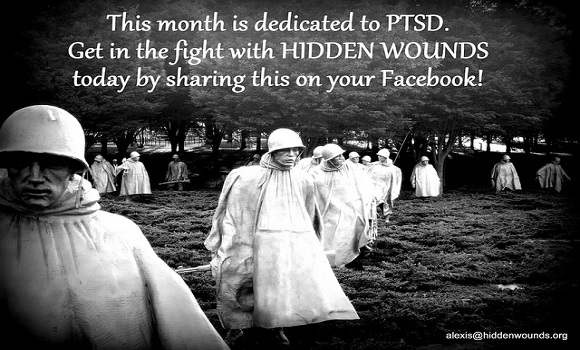
PTSD Awareness Month

PTSD does not just affect the person who has it. Rather, the condition can also have a negative impact on his or her family and friends. It’s not easy to live with the symptoms of PTSD, and seeing your loved ones suddenly change their behavior can be utterly terrifying. You fear that they won’t ever come back to normal, even when they’re under therapy.

Even though things may get difficult, it is important that you give your full support to the person suffering from PTSD. It doesn’t sound much, but it can actually promote a positive change to your loved one. Here are tips on how you and your family can cope with PTSD:

  1. Be patient. Even if a person is totally committed to his treatments, it will really take a lot of time before he can recover from PTSD. This means that you really need to be patient throughout the process.
  2. Learn more about PTSD. If you understand how PTSD works, its effects, and the available treatments, you will be more capable of helping your loved one and keep everything in the right perspective.
  3. Don’t force the person to discuss his thoughts and feelings. Talking about traumatic experiences can be really difficult, even if you are discussing it with someone close to you. Instead of forcing your loved one to talk to you, give him some space and allow him to open up when he is ready. Just tell him that you are always willing to talk.
  4. Learn to listen. If they are ready to talk about their traumatic experiences, listen to them without forming any judgments and expectations. Make him feel that you are interested in what he is saying and that you care about him. You don’t necessarily have to give some advice all the time; it’s enough that you just listen to him. Let the professionals give the advice for you.

In some cases, a person suffering from PTSD may feel the need to rehash the traumatic event over and over again. This can be infuriating at times, but avoid scolding him and telling him to move on with his life. Let him talk and lend a listening ear.

Keep in mind that it’s alright if you don’t like what you hear. It’s understandable that traumatic experiences are stories that are really difficult to digest. However, make sure that you still respect their feelings.

Civilianized: A Young Veteran’s Memoir

In this dark humored War Memoir, Iraq veteran Michael Anthony discusses his return from war and how he defeated his PTSD. Civilianized is a must read for any veteran, or anyone who knows a veteran, who has returned from war and suffered through Post-Traumatic Stress Disorder (PTSD).

dark humored military memoir“An intense memoir.” -Kirkus

“I wont soon forget this book.” -Mary Roach

“A must read.” -Colby Buzzell

“[S]mart and mordantly funny.” –Milwaukee Journal Sentinel

“Anthony delivers a dose of reality that can awaken the mind…” Bookreporter

Order your copy of Civilianized: A Young Veteran’s Memoir .

Picture: Flickr/Alexis Lane

Quote

Thought for the Day – Brian Castner

Today’s thought for the day comes from the ending of Brian Castner’s memoir The Long Walk: A Story of War and the Life That Follows. Castner’s story is about his service overseas as an EOD tech and his, somewhat troubling, return home–or as he calls it “The Crazy.” It’s a good book that I think a lot of veterans will connect with. Not to spoil the ending, but the above quote is from the end and can give you a little peek into the journey that Castner takes from experiencing “The Crazy,” to experiencing “The Om.”