Lately, I’ve been getting a lot of comments, and emails, about my blog post: PTSD What to do When Your Spouse has PTSD. There are a lot of resources out there to help our loved ones with PTSD, but some things have changed since I originally wrote the article, and the article wasn’t as in-depth and helpful as it should’ve been, so an updated version is in order. (Also, since all of the comments and emails I’ve received have been related to PTSD for military personnel, this article will be in reference only to treatment of PTSD for active duty or prior service military personnel—although, I’m sure, it can apply to the populace in the civilian world also suffering with PTSD.)
- First, and foremost, the primary point of contact for any vet suffering from PTSD should by their local VA. The staff at the VA are trained to handle veterans with PTSD, and what’s great about seeking therapy or counseling from the VA, rather than a private organization, is that the VA employs a lot of prior service military personnel as their counselors and therapists. And 100% of the time I hear from other vets, and in my own experience, that it’s always easier to talk to another vet whose “been there” and “done that,” rather than some random therapist or counselor who has no idea.
- Also, the VA has special services for the spouses and family members of military personnel, so a wife, or husband, or children, can seek their own counseling as well.
With that said, I’ve also heard from a lot of vets that the services offered at the VA are severely lacking and not helpful. So it may work for some, but not for others.
Sometimes for vets, who are used to a certain tempo of physicality, and who aren’t used to sharing their feelings, it can be too odd and unwelcoming to have to sit down and suddenly talk about their feelings. The good news is that there are a lot of other options, and a lot of them are shown to work better than typical therapy.
- Neurofeedback. A lot of people aren’t familiar with neurofeedback but the military has been pouring millions of dollars into neurofeedback programs that can help veterans with PTSD—and there are places all across the U.S. that offer it free to veterans.
- What is Neurofeedback?
- Basically, a bunch of doctor’s hook up sensors to a person’s scalp and the sensors read the person’s brain activity. They then hook the sensors up to a computer program and somehow, through the sensors and the computer program, a person’s brain can actually be rewired.
- What is Neurofeedback?
- I’ve actually done neurofeedback before and it can actually be a fun type of therapy. Basically it’s like playing a video game, but instead of having a controller in your hands, your brain controls the movements on screen, and the program trains your brain to act in a certain way and thus rewires the parts of the brain affected by PTSD. EVERY veteran I know who’s used the program has been pleased with the results. And best of all, it’s not like therapy AT ALL, you literally play videogames with your mind—yes, I’m serious!—and sometimes they let you watch movies instead and your brain controls when the movies stop and play and pause, etc.
- Link to an organization that details all the different places where a veteran can get free neurofeedback: http://www.homecoming4veterans.org/

- Meditation. Recently there was an article in the Washington Post about Transcendental Meditation and its usefulness to veterans. (Link here.) Basically, the military has been conducting a lot of research into what they call a “mental toughness” program and a main tenement of that program is meditation. Meditation allows a person to sit alone in a quiet space and just BE with themselves, and the military’s research has shown that soldiers who meditate are less likely to get PTSD, and in the instances that a person has PTSD, it can be an effective coping mechanism, either by itself or combined with another program.
- Meditation is probably the hardest thing listed in this program. Seeking therapy or counseling can be easy because all a person has to do is talk. Neurofeedback can be easy, because like I said, it’s just like playing a videogame. But meditation can be the hardest, because a person has to force themselves to sit still, and quiet, for an hour a day—without falling asleep. It sounds easy. But it can really be difficult, especially if a veteran has PTSD because of the images and memories of war they see when they sit still and close their eyes. But luckily for this, too, there are programs all across the U.S. which are designed to teach someone how to meditate within a few short weeks. (A book on meditation recommended by the military’s mental toughness program is: Mindfulness in Plain English, by Bhante Henepola Gunaratana.)
- Another main tenement of the military’s mental toughness program and that has been shown to help with PTSD, is physical exercise. Everyone knows the benefits of physical exercise on the body, but a lot of people aren’t aware of the benefits of physical exercise on the brain. The military’s mental toughness program has shown that people, who exercise at least three times a week, are more adept at handling stress and dealing with emotional issues; and in separate studies, exercise has been shown to cure depression. A fit body means a fit brain. A lot of veterans who get out of the military often lose that physical part of their lifestyle, they may go from working out three times a week to only once, or none. Lack of physical exercise takes as much a toll on a person’s body as it does their emotional state.
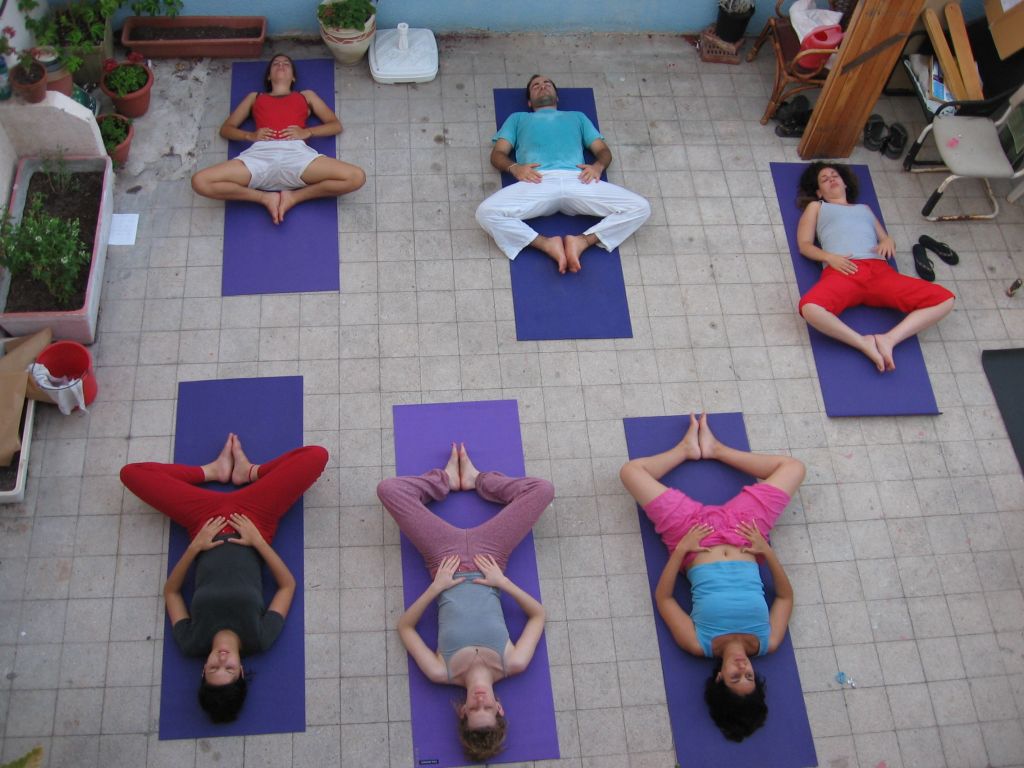 A good physical exercise that’s recommended for veterans suffering with PTSD is yoga. Yoga can be very strenuous and physically demanding, and is often done in heated rooms over 100 degrees, and at the end of every yoga session there is a fifteen minute period of meditation. With yoga a person will be able to combine two methodologies from the military’s mental toughness program. They will have the purely physical component of the exercise and the mental component of the meditation. It’s a win win.
- There are many places and organizations that offer yoga free for veterans, and it’s usually done in a group format so it can be done with a spouse, but another great thing about yoga and meditation is that it can also be done in the comfort of one’s own house, which is always an added benefit.
The main thing to keep in mind when dealing with PTSD is that there ARE options. It’s not like after the Vietnam War when the military and spouses and soldiers didn’t know what was going on; we know what’s going on now and there ARE cures.
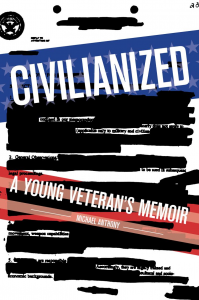
Civilianized: A Young Veteran’s Memoir
In this dark humored War Memoir, Iraq veteran Michael Anthony discusses his return from war and how he defeated his PTSD. Civilianized is a must read for any veteran, or anyone who knows a veteran, who has returned from war and suffered through Post-Traumatic Stress Disorder (PTSD).
 “An intense memoir.” -Kirkus
“I wont soon forget this book.” -Mary Roach
“A must read.” -Colby Buzzell
“[S]mart and mordantly funny.” –Milwaukee Journal Sentinel
“Anthony delivers a dose of reality that can awaken the mind…” Bookreporter
Order your copy of Civilianized: A Young Veteran’s Memoir .